How to Choose the Right Stepper Motor for Your Project?
Choosing the right stepper motor is crucial for any project’s success. According to Dr. Emily Carter, a leading expert in motion control, “The right stepper motor can make or break your design.” Understanding specific requirements is key. Different projects demand different specifications.
Stepper motors vary significantly in torque, speed, and accuracy. For example, a robotics project may require high torque, while an automated camera setup prioritizes precision. Knowing your application's demands allows for informed decisions. Sometimes, engineers overlook compatibility, leading to project delays. Selecting a stepper motor isn't just a straightforward task; it involves careful consideration.
Quality and reliability are paramount. Not all stepper motors are created equal. Some may not perform as expected under load. Researching reputable brands and reading reviews can help avoid pitfalls. Mistakes in selection can lead to inefficiencies. In the end, taking the time to understand your needs might save you from headaches down the road.
Understanding Stepper Motors: Types and Applications
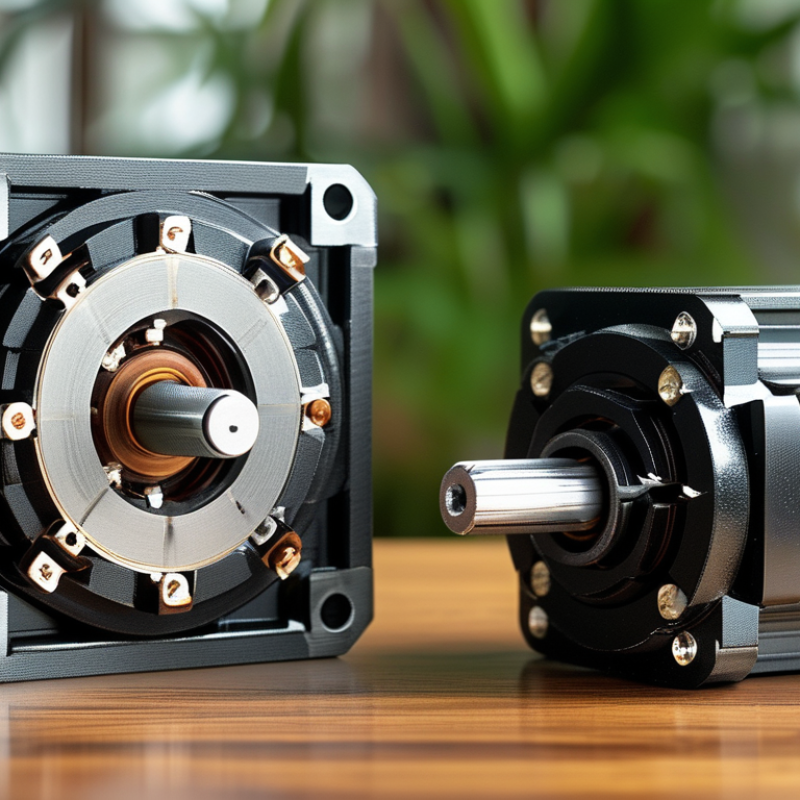
When selecting a stepper motor, it's vital to understand the different types available. The two main types are permanent magnet and variable reluctance stepper motors. Permanent magnet motors are simple to use and provide good torque. They're suitable for applications like 3D printers and CNC machines. On the other hand, variable reluctance motors offer high precision but require more complex control systems. They are typically found in robotics or automated systems.
Tips for choosing the right motor: Consider your application’s torque and speed requirements. This will greatly influence your choice. Understand the difference in current ratings and how they affect performance. Additionally, pay attention to the motor size, as it impacts integration into your design.
Most projects require careful planning. Choose a motor that balances torque and precision. Sometimes motors may not fit perfectly within specifications. It is essential to prototype and test before finalizing your selection. This hands-on approach allows for adjustments based on real-world conditions. Gathering data during tests can reveal surprises that designs often overlook.
Key Specifications to Consider When Choosing a Stepper Motor
When selecting a stepper motor for your project, certain specifications prove crucial. Torque is perhaps one of the most vital factors. A report by the International Journal of Engineering Science reveals that the holding torque of a stepper motor significantly influences its performance. For applications requiring precision, a motor with a higher holding torque helps maintain accurate positioning. Ensure the motor can handle the inertia of your load.
Next, consider the step angle. Common step angles vary from 1.8° to 0.9°. A smaller step angle means better resolution. The Precision Motion and Control Conference indicated that higher resolution stepper motors enhance the achievable detail in movements. This is particularly significant in robotics or CNC applications.
Power requirements can also not be overlooked. Understanding voltage and current ratings is essential. Insufficient power can lead to stalling or reduced performance. According to data from the IEEE, many engineers choose motors with specific power ratings to match their control systems precisely. It's imperative to balance these specifications based on your project needs. Reflecting on these factors can help refine your choice process.
Step Motor Specifications Comparison
Evaluating Torque Requirements for Your Project
When evaluating torque requirements for your project, start by understanding the load your stepper motor will handle. Calculate the static and dynamic torque needed for your application. Consider factors such as friction, acceleration, and speed. The combination of these elements determines the necessary torque.
Tips: Calculate the required torque accurately. A common mistake is underestimating the load. Always factor in extra torque for unexpected resistance.
Moreover, consider the mechanical setup. The way the motor is mounted affects performance. If the load is too heavy, your chosen stepper motor may struggle. This can lead to overheating and failure. It’s essential to match the motor specifications with real-world conditions.
Tips: Evaluate your design regularly. If you notice issues, reassess the torque calculations. Sometimes, a simple redesign can lead to better efficiency.
In addition, pay attention to the duty cycle of your motor. Continuous use may lead to heat buildup. Ensure your motor’s rated torque aligns with the operational demands. Remember, it's better to have some overhead torque capacity. This gives you a buffer for changes during operations.
Assessing Control Options for Stepper Motors
When selecting a stepper motor for your project, control options play a crucial role. Stepper motors can be driven using various methods, including open-loop and closed-loop systems. Open-loop systems are simpler and cost-effective. They control the motor through step pulses but may lack precision. In contrast, closed-loop systems utilize feedback mechanisms, enhancing accuracy and performance.
According to a recent industry report, approximately 45% of users prefer stepper motors with closed-loop control for applications requiring high precision. This trend indicates a growing demand for systems that minimize missed steps and optimize performance. However, closed-loop systems can be complex and costly. Designers must weigh the benefits against budget constraints and application needs.
Considering user experience is vital when choosing a control option. Users often report frustration with setups requiring frequent adjustments. Properly assessing the control method can significantly impact efficiency and satisfaction in long-term projects. Furthermore, the need for continuous improvement remains, as many designers still struggle with optimal motor control, leading to inconsistencies in performance. Engaging with user feedback and performance data can promote better choices in motor control strategies.
Common Mistakes to Avoid When Selecting a Stepper Motor
Choosing the right stepper motor can be perplexing. Many enthusiasts and professionals still make preventable mistakes. One common error is neglecting torque requirements. A report by the International Society of Automation indicates that nearly 30% of projects fail due to inadequate torque selection. Assessing the load and speed accurately is essential.
Another frequent misstep is overlooking the step angle. A smaller step angle can yield finer precision, which is often vital in applications like 3D printing or CNC machinery. A motor with a step angle of 1.8 degrees can provide 200 steps per revolution. Consider the specific needs of your project before making a choice.
**Tip:** Always calculate the required holding torque. Use this formula: Holding torque = load weight x distance from motor shaft.
Also, don’t forget to think about the motor drive. Many users underestimate this component’s significance. An inappropriate driver can lead to excessive heating, thus reducing efficiency. Thoroughly research both components to ensure compatibility.
**Tip:** Test different configurations in smaller experiments before finalizing choices. This can save time and resources down the line.





 Daniel.Ding
 Ding
Ding