The use of Hybrid Stepper Motors has transformed various industries. Experts like Dr. Emily Hart, a leading engineer in motion control systems, emphasize that "Hybrid Stepper Motors combine the best features of traditional stepper and servo motors." This unique blend offers outstanding accuracy and efficiency for diverse applications.
In today's fast-paced technological environment, engineers seek reliable solutions. Hybrid Stepper Motors stand out due to their precise control and high torque at low speeds. These attributes make them suitable for 3D printers, CNC machines, and robotics. However, engineers must remain aware of their limitations. Missteps in selecting the right motor can lead to inefficiencies and performance issues.
Choosing the appropriate Hybrid Stepper Motor initially appears straightforward. Yet, factors like load requirements and operational speeds complicate the decision. Understanding these intricacies is essential. With careful planning, teams can maximize the advantages offered by Hybrid Stepper Motors while navigating potential oversights. The benefits are clear, and so are the responsibilities.

Hybrid stepper motors are increasingly popular in precision control applications. They combine the best features of permanent magnet and variable reluctance stepper motors. This combination provides high torque and excellent positioning accuracy. Many engineers appreciate their reliability in various settings.
In applications requiring detailed movement, hybrid stepper motors excel. They offer better resolution than traditional stepper motors. This makes them ideal for robotics and CNC machining. However, they can sometimes experience issues like resonance at certain speeds. Adjustments in design can help mitigate these effects.
The range of torque capabilities is impressive, allowing for diverse applications. Fine-tuning is essential to maximize performance. Users must also consider heat generation, as it can impact functionality. Knowing how to manage these aspects can enhance project outcomes. Understanding these motors takes experience and knowledge, but the benefits are notable.
This chart illustrates the top 10 benefits of using hybrid stepper motors, evaluated on a scale from 1 to 10. The advantages illustrated include precision control, high torque, and low vibration among others, highlighting why hybrid stepper motors are often chosen for precision control applications.
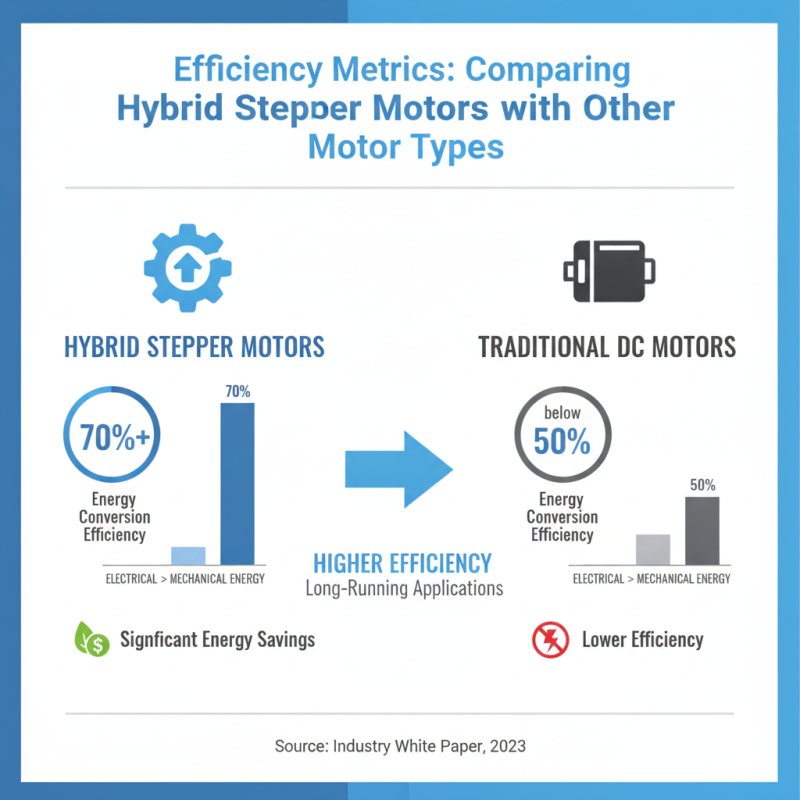
When comparing hybrid stepper motors with other motor types, metrics reveal strong performance advantages. Hybrid steppers often achieve over 70% efficiency in conversion from electrical to mechanical energy. In contrast, traditional DC motors usually operate below 50% efficiency. This difference can lead to significant energy savings in long-running applications.
Noise levels are another key point of comparison. Hybrid stepper motors typically emit less noise than their counterparts. The average decibel level for hybrid steppers is around 50 dB, while some AC and brushed DC motors can exceed 70 dB. This makes hybrids suitable for environments where noise reduction is critical.
Durability is a critical consideration. Hybrid stepper motors often have a longer operational life compared to other motor types. Studies show that they can last up to 10,000 hours under optimal conditions. However, factors like heat and misalignment can impact their lifespan. Adjusting operational strategies to minimize these risks is essential for maximizing performance. Understanding these metrics is vital for informed decision-making in motor applications.
Hybrid stepper motors are well-regarded for their torque characteristics, making them ideal for high-performance applications. A study from the International Journal of Advanced Manufacturing Technology shows that hybrid stepper motors can deliver torque levels significantly higher than traditional stepper motors, often exceeding 0.5 Nm per phase. This attribute is crucial for tasks requiring precision and reliability.
In high-performance settings, torque consistency becomes vital. Hybrid stepper motors maintain high torque at lower speeds, unlike other types that may falter. When integrated into robotics or CNC applications, their ability to handle varying loads is indispensable. It’s noted that these motors typically perform best when operated between 1 and 2 A per phase, balancing power consumption with sustained torque output.
**Tip:** Always consider using NEMA 23 hybrid stepper motors for projects demanding higher torque.
Despite their advantages, it is essential to acknowledge limitations. Heating can become an issue, potentially affecting performance. Proper heat management solutions can help maintain efficiency. Regularly monitoring the operational environment can prevent overheating while maximizing service life.
**Tip:** Identify the thermal limitations of your motor under load conditions before finalizing project designs.
Careful consideration of these torque characteristics can lead to enhanced performance in various applications. Striking the right balance between torque, speed, and thermal management is key to leveraging the full potential of hybrid stepper motors.
| Benefit | Description | Application Examples |
|---|---|---|
| High Precision | Provides accurate positioning and repeatability. | 3D Printers, CNC Machines |
| High Torque at Low Speeds | Delivers strong torque output at low RPMs. | Robotic Arms, Linear Actuators |
| Easy Control | Simplified drive and control systems. | Automated Guided Vehicles, Pick and Place Equipment |
| Cost-Effective | Affordable solution compared to high-performance servo motors. | Industrial Automation, Packaging Machines |
| Robust Design | Durable and capable of withstanding harsh environments. | Medical Devices, Aerospace Applications |
| Low Maintenance | Minimal maintenance required for long-term use. | Factory Automation, Robotics |
| High Step Count | Allows for finer control and smoother operation. | Precision Machining, Laser Cutting |
| Compact Size | Space-saving design, ideal for compact applications. | Miniature Robotics, Small Tooling |
| Flexible Integration | Can easily integrate into various systems and setups. | IoT Devices, Custom Automation Solutions |
| Energy Efficient | Lower power consumption compared to traditional motors. | Renewable Energy Systems, Smart Home Devices |
Hybrid stepper motors are becoming a popular choice in various applications due to their cost-effectiveness. Evaluating the long-term savings with these motors can reveal substantial financial benefits. According to a report by the International Electrotechnical Commission, hybrid stepper motors typically reduce energy consumption by around 30%. This efficiency translates to lower electricity bills for businesses over time.
When implementing hybrid stepper motors, consider the initial investment against future savings. Many projects often overlook maintenance costs. While these motors generally require less maintenance than other alternatives, those savings can accumulate significantly.
Understanding the specific requirements of your project can lead to smarter choices. Each application has unique demands that might not align with the assumed benefits of hybrid stepper motors. Analyzing a detailed needs assessment can shed light on potential oversights and refine your selection process.
Hybrid stepper motors are gaining traction in various industries due to their unique advantages. Their precise control and excellent torque make them ideal for automation tasks. In manufacturing, they optimize machine performance by ensuring accurate positioning. This feature is vital for tasks like assembly and printing, where precision directly influences product quality.
In robotics, these motors allow for smooth movement and reliable operation. They enhance functionality in robotic arms, improving efficiency in assembly lines. However, challenges remain in tuning their performance for specific applications. Some users find initial setup complex, requiring more expertise than expected. It’s essential to evaluate system needs continually and adjust motor settings accordingly.
Medical equipment also benefits significantly from hybrid stepper motors. They provide the necessary precision for devices like pumps and imaging machines. But, integration can sometimes lead to issues, such as overheating. Users must monitor temperature to ensure optimal performance. A balance between efficiency and reliability is key in these scenarios, demanding continuous improvement and adaptation.