How to Choose the Best Stepper Drive for Your Needs?
Choosing the right Stepper Drive for your applications can be challenging. With so many options available, making the best choice requires careful consideration. A Stepper Drive is essential in controlling motor performance and precision. Understanding key factors helps in finding the ideal match for your project.
The first step is to assess your specific needs. Consider the torque, speed, and resolution required for your application. Different Stepper Drives offer varied capabilities. It is crucial to align the drive's specifications with your performance expectations. Sometimes, what seems to fit may not deliver the expected results.
Moreover, research different products and brands. Check reviews and seek recommendations from experienced users. Knowing which Stepper Drives have a solid reputation can save time and resources. Trustworthy sources provide insights that might not be visible at first glance. Think critically about various options. Sometimes, the most popular choice might not be the best fit for your needs.

Understanding the Basics of Stepper Drives and Their Functionality
Stepper drives are essential in controlling stepper motors. They convert digital signals into precise motor movements, allowing for accurate positioning. This functionality is crucial in industries like robotics, CNC machines, and 3D printing. According to industry reports, the demand for stepper drives is expected to grow by 6% annually over the next five years. This growth reflects their importance in modern automation.
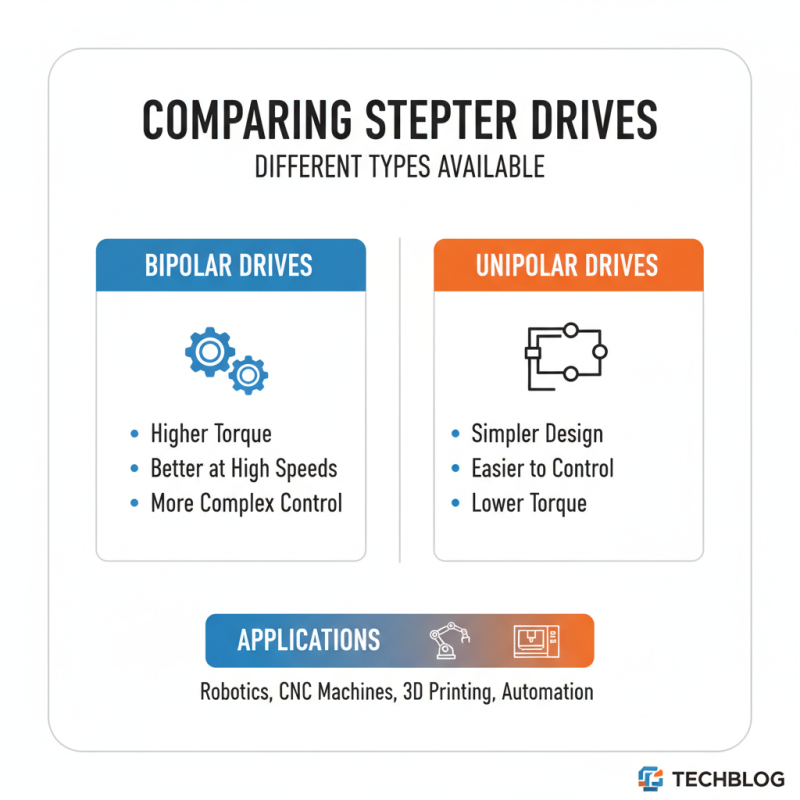
Understanding the basics of stepper drives involves recognizing their types and functionalities. Bipolar and unipolar are common types, each having unique advantages. Bipolar drives provide more torque but require a more complex setup. Unipolar drives are easier to manage but offer less power. Choosing the right type requires careful consideration of your specific application and performance needs. It’s not always straightforward. Factors like load requirements and desired precision contribute to the decision-making process.
Many users overlook certain technical specifications, which can be detrimental. For instance, microstepping capabilities can significantly improve performance in some applications. However, it may also introduce complexities in setup and tuning. Every application is different, and what works for one may not suit another. Investing time in understanding these nuances pays off in the long run.
Identifying Your Specific Requirements for Stepper Drive Applications
When selecting a stepper drive, it's crucial to identify your specific requirements. Understanding the application is key. Different applications necessitate different driving techniques. Consider factors like torque, speed, and precision. Be clear about what your project demands. This will guide your decision.
Tips: Evaluate the load characteristics. Determine if your application requires high torque at low speeds or smooth motion at high speeds. This information will significantly influence your stepper drive choice.
Don't overlook the integration aspects. Ensure that the stepper drive matches other components in your system. You might need precise voltage ratings or control signals. Mismatched components can lead to performance issues.
Tips: Test different setups if possible. This can help you understand which configurations yield the best results. Note the disparities in performance. Every project has unique demands; find what works for yours.
Comparing Different Types of Stepper Drives Available in the Market
When selecting the best stepper drive, understanding the different types on the market is crucial. Common types include bipolar and unipolar drives. Bipolar drives offer greater torque at higher speeds. Unipolar drives, on the other hand, are simpler and easier to control. Each type serves different applications, from robotics to CNC machines.
Consider your project requirements carefully. If you need precision, a microstepping drive is a good choice. These drives can control the position more accurately, allowing smoother motion. Evaluate the power requirements, too. Higher voltage often results in better performance. However, ensure your power supply matches the drive specifications.
**Tip:** Always check the drive's compatibility with your existing hardware. Incompatible devices can lead to performance issues.
Another important detail is the current rating. It determines how much power the motor receives. Too high a current may overheat your components. On the flip side, too low can limit the motor's performance.
**Tip:** Experiment with different settings to find the sweet spot. Tuning your drive leads to better efficiency and performance.
Evaluating Key Features and Specifications of Stepper Drives
When selecting a stepper drive, understanding key features is critical. For instance, torque ratings and voltage requirements can significantly impact performance. According to industry reports, a higher torque rating generally leads to better load handling. If your application requires precise movements, look for a drive with microstepping capabilities. Microstepping allows for finer control and smoother motion, which is essential in robotics and advanced machinery.
Another essential aspect is feedback systems. Closed-loop stepper drives offer better reliability compared to open-loop systems. This is crucial in environments where precision is paramount. Studies indicate that closed-loop systems reduce heat and increase efficiency by nearly 20%. However, implementing these systems can add complexity. Evaluating your specific needs against these features will help identify the correct drive.
Compatibility with your existing hardware should also be considered. Some drives may not work seamlessly with all motors. Incompatibility can lead to increased costs and project delays. Thus, a thorough review of specifications is recommended. It’s important to be prepared for potential setbacks in configuration. Balancing specifications with practical application requires a clear understanding of your project’s demands. Proper research will lead to more informed decisions and effective operation.
Stepper Drive Performance Comparison
This chart compares key performance metrics of different stepper drives, including torque, current, voltage, and microstepping options. Each value represents a typical performance measurement that helps in evaluating the best stepper drive for specific applications.
Assessing Budget Considerations and Cost-Effectiveness in Choice
When selecting a stepper drive, budget plays a crucial role. It’s essential to analyze not just the initial costs but also the long-term benefits. A less expensive drive may initially attract your attention. However, it could lead to higher operational costs. Consider maintenance and potential downtimes. Cost-effectiveness can extend beyond the purchase price.
Evaluate the technology behind the drive. Some more affordable options might lack efficiency. This could affect your overall productivity. Are you willing to sacrifice performance for a lower price? Finding the right balance between cost and functionality is key. Look for drives that offer energy efficiency. They might have a higher upfront cost but can save you money over time.
Also, think about the scalability of your choice. Will this drive meet your future needs? Investing in a more capable stepper drive can be advantageous. It allows for growth without needing replacements soon after. Take the time to read reviews and consult experts. Learning from others' experiences can provide valuable insights. A thoughtful decision will pay off in the long run.




 Daniel.Ding
 Ding
Ding