What is a Stepper System and How Does it Work?
A Stepper System plays a vital role in automation and robotics. It converts electrical pulses into mechanical movement. By controlling the number of pulses sent to the motor, precise positioning is achieved. Dr. Emily Carter, a leading expert in automation technology, once said, "The efficiency of a Stepper System can redefine the limits of mechanical design."
This technology is widely used in printers, CNC machines, and medical devices. Its ability to offer high precision makes it indispensable in various industries. However, not all Stepper Systems are created equal. Some designs may face issues like missed steps or overheating when not properly managed. Understanding these potential pitfalls is crucial for users and engineers alike.
The world of Stepper Systems is complex yet fascinating. Each project has unique demands that can challenge even seasoned professionals. Continuous learning and adaptation are essential in this ever-evolving field. Balancing performance with reliability can often require a rethink of traditional approaches.
Definition and Components of a Stepper System
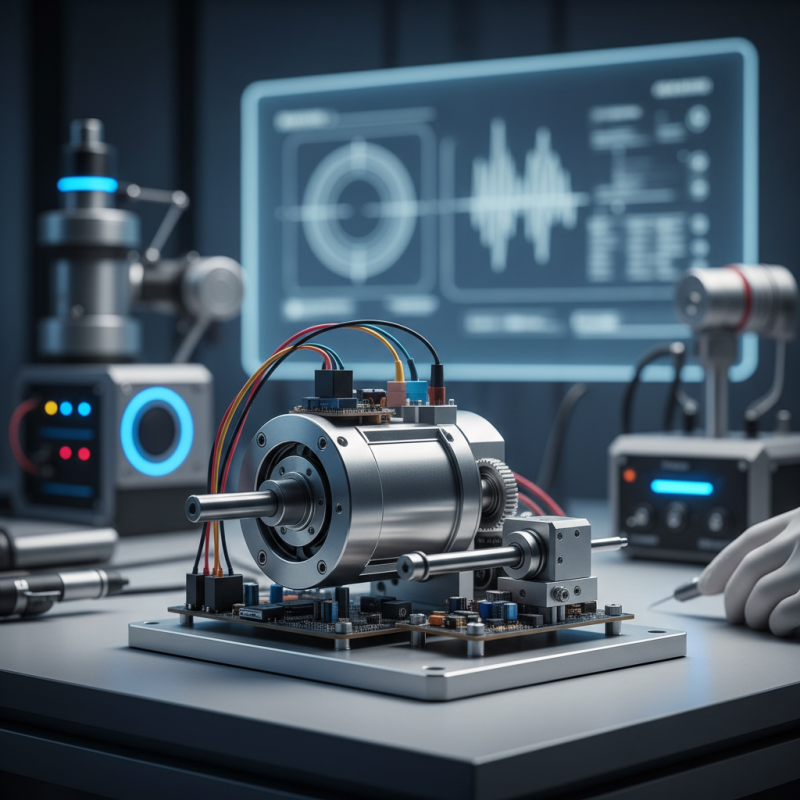
A stepper system is crucial in numerous applications, particularly in automation and robotics. It involves a series of components that work together to convert digital pulses into mechanical movement. The primary elements include a stepper motor, a driver, and a controller. The stepper motor divides a full rotation into a set number of steps, allowing precise control of angular position.
Research indicates that stepper motors are used in about 70% of all motion control applications. These motors provide high torque at low speeds, making them ideal for tasks requiring accuracy. The driver translates control signals from the microcontroller into electrical pulses that regulate the motor's movements. This synchronization is vital for applications such as 3D printing and CNC machines.
While the technology is reliable, users sometimes face challenges. For instance, overheating motors can lead to performance issues. Additionally, selecting the right driver can significantly impact efficiency. According to industry reports, about 15% of users fail to optimize their systems due to these choices. Understanding the components and their interactions is essential for achieving the best results in stepper system applications.
Types of Stepper Motors Used in Stepper Systems
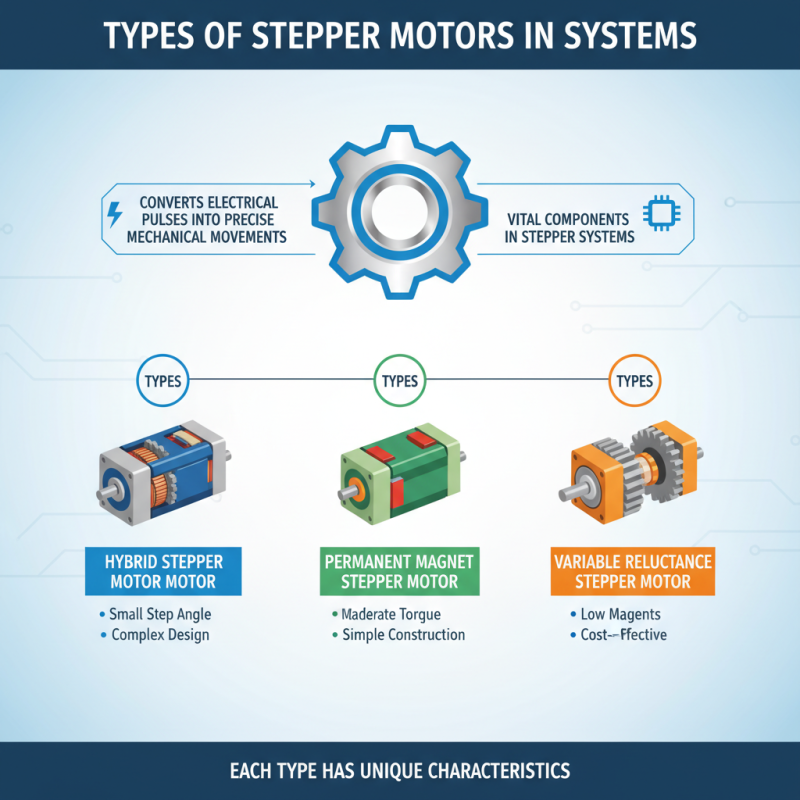
Stepper motors are vital components in stepper systems. They convert electrical pulses into precise mechanical movements. There are several types of stepper motors commonly used in these systems, each with unique characteristics.
The most prevalent types include permanent magnet stepper motors, reluctance stepper motors, and hybrid stepper motors. Permanent magnet models are known for their excellent accuracy and torque at low speeds. In specific applications, they can deliver step angles of 1.8 degrees. According to industry reports, the global stepper motor market is expected to grow steadily, reaching a valuation of over $4 billion by 2025.
Reluctance stepper motors operate on the principle of magnetic reluctance. They are typically lightweight and less expensive, providing high-speed performance. Hybrid stepper motors combine features of both permanent magnet and reluctance types. They are versatile, offering high precision and torque. However, users must consider the trade-offs in terms of complexity and control requirements. Each type has pros and cons, making it essential to analyze specific application needs before selection.
Mechanism of Operation in Stepper Systems
Stepper systems operate through precise control of movement, often used in robotics and automation. The core mechanism involves a series of electromagnets arranged in a specific configuration. When powered, these magnets create a magnetic field that interacts with the rotor, causing it to move in precise increments, known as steps. Each step represents a fixed angular displacement, typically between 1.8° to 90°, depending on the system's design.
The operation relies on a controller that sends signals to the coils in a specific sequence. This sequence alters the magnetic field, allowing the rotor to “step” from one position to the next. As the rotor moves, the system can achieve high levels of accuracy without requiring encoders. While this simplicity is advantageous, careful calibration is needed. Misalignment can lead to skipped steps, impairing performance. Regular maintenance helps mitigate this issue, ensuring reliability in long-term applications where precision is key.
Stepper Motor Performance Characteristics
This bar chart illustrates the performance characteristics of a typical stepper motor, highlighting torque, speed, precision, and power consumption metrics. Such metrics are crucial for understanding the efficiency and application of stepper systems in various automation processes.
Applications of Stepper Systems in Various Industries
Stepper systems are widely used in many industries due to their precision and reliability. In manufacturing, they enable automated machinery to operate with great accuracy. This is essential for producing parts that meet strict tolerances. Robotics also benefit from stepper systems. They allow robotic arms to perform intricate tasks with consistent results.
The medical industry utilizes stepper systems in various applications, including imaging devices. These systems assist in positioning equipment accurately to capture detailed images. In the field of aerospace, stepper motors are employed in testing setups. They ensure that components are subjected to precise stress and motion, validating their performance under real-world conditions.
Despite their advantages, stepper systems have limitations. They can overheat during prolonged use, leading to performance drops. Additionally, the complex programming required for multi-axis control can be daunting. Organizations must weigh these factors carefully. While the benefits are clear, the challenges should not be overlooked.
What is a Stepper System and How Does it Work? - Applications of Stepper Systems in Various Industries
| Industry |
Applications |
Advantages |
Key Features |
| Manufacturing |
Precision machining and assembly processes |
High accuracy and repeatability |
Controlled motion and positioning |
| Robotics |
Motion control for robotic arms |
Flexibility in programming |
Multi-axis control |
| Aerospace |
Wing flaps and landing gear deployment |
Reliability under extreme conditions |
High torque and precision |
| Medical |
Automated diagnostic equipment |
Precision and consistency in tests |
Compact size and minimal maintenance |
| Consumer Electronics |
Laser printers and 3D printers |
High detail in outputs |
Programmable for complex designs |
Advantages and Disadvantages of Using Stepper Systems
Stepper systems are widely used for their precision in motion control. They excel in applications where accurate positioning is crucial. However, they come with both advantages and disadvantages that users should thoughtfully consider.
On the positive side, stepper systems offer exceptional repeatability. This makes them ideal for tasks requiring consistent performance. They also provide high torque at low speeds, which is beneficial in various mechanical setups. Their open-loop control system simplifies design and programming. Users can often implement them without complex feedback systems. However, potential drawbacks persist. The systems might struggle with high-speed applications, leading to missed steps. Additionally, they can generate vibrations and noise, which may affect performance in sensitive environments.
It's critical to evaluate the specific needs of your project. The cost-effectiveness of stepper systems is attractive. Yet, their limitations can lead to inefficiencies in more demanding applications. Calculating the balance between precision and speed is essential. Users must weigh these factors to choose the right system for their needs.




 Daniel.Ding
 Ding
Ding