What is a Hybrid Stepper Motor and How Does It Work?
The Hybrid Stepper Motor has become a critical component in various industries, including robotics and automation. According to a report by Grand View Research, the global stepper motor market is projected to reach $6.8 billion by 2026, showcasing the growing demand for precision motion control solutions. This trend highlights the essential role of Hybrid Stepper Motors in enhancing efficiency and accuracy in modern machinery.
Dr. Emily Zhang, a renowned expert in motion control systems, emphasizes, "Hybrid Stepper Motors combine the best features of permanent magnets and variable reluctance motors, making them ideal for many applications." This unique design allows for precise positioning and smoother operation compared to traditional stepper motors. However, it is essential to consider that Hybrid Stepper Motors may not be the ideal solution for every scenario. Their performance can be affected by environmental factors and load conditions, which may lead to potential limitations in specific applications.
Despite their advancements, challenges remain in the optimization and integration of Hybrid Stepper Motors. Understanding the balance between torque, speed, and accuracy is crucial for engineers and industry leaders. As technology evolves, the future of Hybrid Stepper Motors lies in continual improvement and adaptation to meet diverse needs.
Definition and Overview of Hybrid Stepper Motors
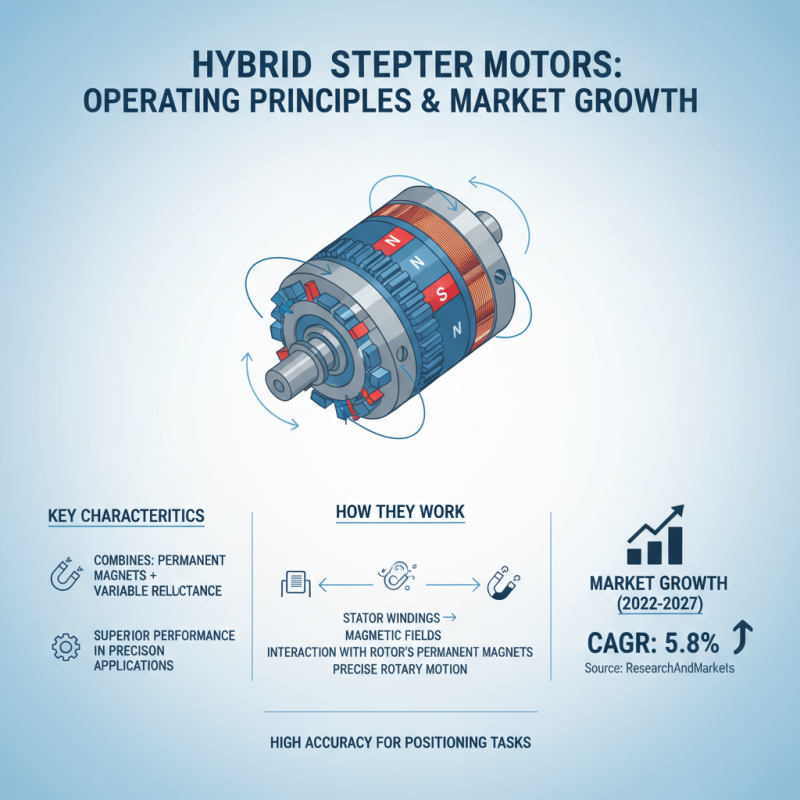
Hybrid stepper motors combine the best aspects of permanent magnet and variable reluctance designs. This unique blend makes them highly efficient and powerful. These motors use a rotor with permanent magnets and stator windings, allowing for precise control of movement. As a result, they can achieve finer resolutions than traditional stepper motors.
The operation of hybrid steppers is interesting. When electrical current flows through the stator coils, it creates a magnetic field. This field interacts with the permanent magnets on the rotor. The rotor rotates in discrete steps, making it ideal for applications requiring accurate positioning. However, one challenge can arise with resonance at certain speeds, leading to unexpected vibrations. Understanding this behavior is crucial for optimizing their use.
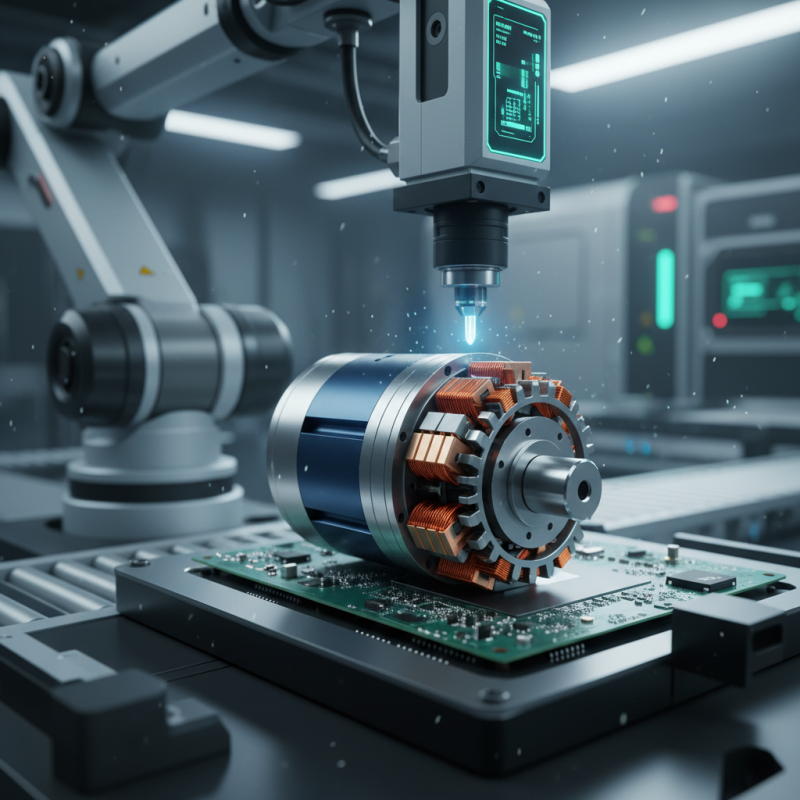
Hybrid stepper motors find numerous applications across industries. They are used in 3D printers, CNC machines, and robotics, among others. Despite their advantages, careful calibration of drive parameters is necessary. Users must be conscious of heat generation and load conditions. Balancing these factors ensures reliable performance and longevity of the motor.
What is a Hybrid Stepper Motor and How Does It Work? - Definition and Overview of Hybrid Stepper Motors
| Attribute |
Details |
| Definition |
A hybrid stepper motor combines features of both permanent magnet and variable reluctance stepper motors, allowing for high precision and torque. |
| Working Principle |
Hybrid stepper motors work by energizing coils in a defined sequence, causing the rotor to move in precise steps, enabling controlled motion. |
| Applications |
Commonly used in 3D printers, CNC machines, robotics, and automation systems. |
| Advantages |
High precision, excellent torque at low speeds, and digital control make them ideal for many applications. |
| Disadvantages |
Can lose steps under heavy loads, and require a driver circuit capable of handling the required current and voltage. |
| Key Considerations |
Selection should consider torque, speed, and the specific application's requirements for motion control. |
Key Components of a Hybrid Stepper Motor
A hybrid stepper motor combines features of both permanent magnet and variable reluctance motors. This unique design results in high precision and excellent torque. Understanding its key components is essential for engineers and designers. The motor typically includes a rotor, stator, and a driver circuit. The rotor, often made from a permanent magnet, facilitates smooth movement and accurate positioning.
The stator features multiple windings arranged in a specific pattern. When energized, these windings create a magnetic field. This magnetic field interacts with the rotor, producing rotational motion. Reports suggest that hybrid stepper motors deliver up to 85% efficiency, making them ideal for applications requiring precise control. Notably, the driver circuit regulates the current and voltage supplied to the coils, directly impacting performance.
However, challenges exist. Thermal management is a critical consideration, as overheating can degrade performance. Additionally, the complexity of the driving mechanism can lead to increased costs. Effectively balancing these factors is crucial for optimal operation. Industry data indicates that while these motors are efficient, their maintenance can be demanding. Thus, engineers must weigh the benefits against potential drawbacks when selecting a hybrid stepper motor for specific applications.
Hybrid Stepper Motor Performance Comparison
Operating Principles of Hybrid Stepper Motors
Hybrid stepper motors combine the characteristics of permanent magnet and variable reluctance motors. They are widely used in precision applications because of their superior performance. These motors operate through the interaction of magnetic fields generated by the stator windings and the rotor's permanent magnets. This interaction produces precise movements, allowing for high accuracy in positioning tasks. According to a report by ResearchAndMarkets, the hybrid stepper motor market is expected to grow at a CAGR of 5.8% from 2022 to 2027.
The operating principles of hybrid stepper motors are rooted in the ability to achieve finer step resolution. They typically have a step angle of 1.8 degrees, translating to 200 steps per revolution. This capability allows for smoother motion and reduces mechanical backlash. Many manufacturers highlight the efficiency of these motors, often reporting power savings of up to 25% compared to traditional stepper motors under similar workloads.
Tips: When selecting a hybrid stepper motor, consider torque requirements and load conditions. Analyze different step resolutions for enhanced performance. Remember that environmental factors, such as temperature, can impact motor efficiency. Testing your motor's performance in real-world conditions is crucial for optimizing your application.
Advantages of Using Hybrid Stepper Motors
Hybrid stepper motors combine the benefits of both permanent magnet and variable reluctance stepper motors. This unique design enhances their performance in various applications. The integration of a permanent magnet rotor with a wound stator provides precise control over motion. This makes them suitable for intricate tasks in robotics and automation.
One significant advantage of hybrid stepper motors is their high torque output. They maintain strong holding torque at low speeds. This capability is crucial for applications requiring stability and accuracy. Furthermore, their design leads to efficient operation. They consume less power than traditional motors while delivering reliable performance.
Another benefit lies in their versatility. Hybrid stepper motors can operate in a range of environments. This makes them ideal for diverse industries, including manufacturing and medical devices. However, users may encounter challenges with resonance at certain speeds. Addressing this requires careful tuning. Regular monitoring can help maintain efficiency. In some cases, the initial cost may be higher than alternative motor options. Yet, the long-term reliability often justifies the investment.
Applications of Hybrid Stepper Motors in Industry
Hybrid stepper motors are increasingly vital in various industrial sectors. Their ability to provide precise control makes them ideal for automation tasks. In manufacturing, they are often used in 3D printers and CNC machines. According to a 2022 industry report, the demand for hybrid stepper motors in automation applications is projected to grow by 8% annually. This growth reflects their reliability and efficiency in production lines.
Another application lies in robotics. Hybrid stepper motors enable smooth and controlled movements. A study noted that their torque characteristics allow for high-performance robotics. However, they can struggle with heat dissipation during extended operation. This issue highlights the need for careful design choices.
Healthcare is also leveraging hybrid stepper motors. They are crucial in devices such as MRI machines and surgical robots. The motors provide the precision necessary for complex movements. Industry analysts predict a surge in adoption rates. Yet, ensuring consistent performance under varying loads is a challenge. Engineers must continually refine designs to address such concerns, underscoring the evolving nature of this technology.




 Daniel.Ding
 Ding
Ding