What is a Stepper Motor and How Does It Work?
Stepper motors are essential components in various applications, including robotics and automation. Known for their precise control, these motors enable accurate positioning without the need for feedback systems. According to Dr. Emily Barnes, a leading expert in the field, "Stepper motors are revolutionizing the way we approach motion control."
These motors function by converting electrical pulses into mechanical movement. Each pulse moves the motor shaft by a specific angle, allowing for unparalleled precision. Their design includes coils that create magnetic fields, producing motion in discrete steps. This operation makes them ideal for applications that require exact rotations.
Despite their advantages, stepper motors are not perfect. They can experience issues like resonance and overheating under continuous use. Understanding these limitations helps engineers make informed decisions. As technology evolves, the role of stepper motors continues to grow, challenging us to improve their efficiency and performance.
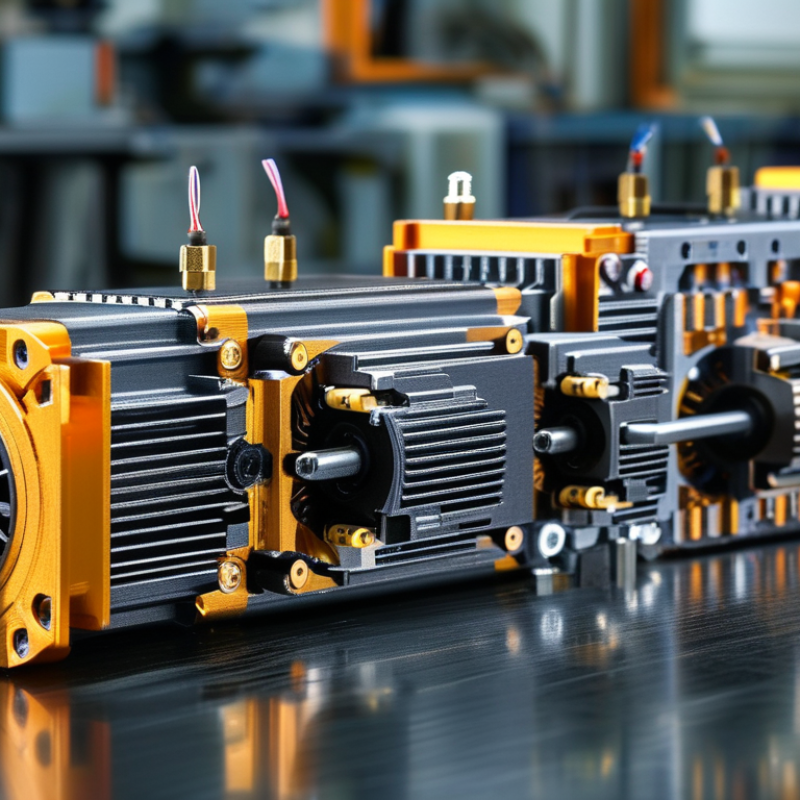
What is a Stepper Motor?
A stepper motor is a type of electric motor that divides a full rotation into a number of equal steps. Each step represents a specific angle of movement, making it ideal for precise control in robotics and automation. Unlike conventional motors, stepper motors can hold their position without needing a continuous power supply, which is beneficial for battery-operated devices.
Research indicates that the global stepper motor market is expected to grow significantly. A report by Research and Markets forecasts a compound annual growth rate (CAGR) of 5.4% from 2021 to 2026. This growth reflects the increasing demand for automation in industries such as manufacturing and healthcare. Engineers often choose stepper motors for their reliability in delivering consistent, repeatable motion, a crucial factor in applications like 3D printing and CNC machinery.
However, stepper motors are not without limitations. They can lose steps if overloaded, causing a loss of precision. Additionally, they often produce more heat compared to DC motors, which can be a concern in tightly packed systems. Understanding these challenges is essential for engineers when designing systems that leverage the unique benefits of stepper motors.
The Basic Principles of Stepper Motor Operation
Stepper motors are crucial in modern technology. Their operation is based on precise control of their movement. They divide a full rotation into equal steps, allowing for accurate positioning. This feature makes them popular in 3D printers and CNC machines.
Electricity flows through coils in the motor, creating magnetic fields. These fields interact with a permanent magnet rotor. By energizing different coils in sequence, the motor turns step by step. This process provides excellent control over speed and position. However, this method can cause vibrations and heating issues, which may need to be managed.
Tips: Ensure your motor's driver is compatible for optimal performance. Adjusting your microstepping settings can reduce vibrations. Regular maintenance can also improve its lifespan. Experiment with different drive techniques to find the best fit for your application.
Types of Stepper Motors and Their Applications
Stepper motors are essential components in many modern technologies. They come in various types, each serving different purposes. The most common types include permanent magnet stepper motors, variable reluctance stepper motors, and hybrid stepper motors. Each has unique characteristics that make them suitable for specific applications.
Permanent magnet stepper motors utilize magnets, producing a strong torque at low speeds. They are often found in 3D printers and CNC machines. Variable reluctance stepper motors work on the principle of magnetic reluctance and are typically used in applications requiring precision. Hybrid stepper motors combine features from both types, offering high efficiency and accuracy. These motors are widely used in robotics and medical devices.
Despite their advantages, stepper motors have limitations. They can lose steps under high loads. This can lead to inaccuracies in applications that require precise movements. Therefore, careful consideration is needed when selecting a stepper motor for a project. Understanding the specific requirements is crucial to ensuring optimal performance.
Key Components of a Stepper Motor
Stepper motors are widely used in various applications due to their precise control and reliability. Understanding their key components is essential to grasp how they function effectively in motion control.
The heart of a stepper motor is its rotor. This is the part that actually moves. It is magnetized and positioned within the stator. The stator contains coils that activate sequentially, producing a magnetic field that interacts with the rotor. When the coils are activated in a specific order, the rotor turns in discrete steps. This allows for precise positioning, making stepper motors ideal for applications like 3D printers and CNC machines.
Another critical component is the driver circuitry. It manages the input signals to the motor. Without a well-designed driver, the performance may suffer. Some drivers can be complex, requiring careful calibration. Additionally, the power supply must be compatible to ensure predictable behavior. Even small discrepancies can lead to performance issues. Understanding these components enhances the ability to troubleshoot when problems arise, highlighting the importance of knowledge in stepper motor technology.
Advantages and Limitations of Using Stepper Motors
Stepper motors are popular in various applications, but they come with both advantages and limitations. One significant benefit is their precise control of movement. According to a report by Allied Market Research, the stepper motor market was valued at approximately $3.18 billion in 2021, showcasing its relevance in automation and robotics. This precision is vital in industries like 3D printing and CNC machining, where exact positioning is crucial.
However, stepper motors have limitations that users must consider. They can suffer from resonant vibrations at certain speeds, leading to reduced performance. Studies have shown that stepper motors can lose torque at higher speeds, sometimes as much as 80% at their maximum RPM. Additionally, they often struggle in applications requiring continuous rotation or high acceleration. The lack of feedback mechanisms in many stepper systems can cause issues, resulting in missed steps and positional errors, especially under varying loads.
While stepper motors excel in many scenarios, their drawbacks cannot be ignored. Users should carefully analyze their specific needs against these limitations. This discernment is essential to ensure that a stepper motor aligns well with the requirements of their application. Balancing the benefits with the potential pitfalls allows for more informed decision-making.
Stepper Motor Performance Comparison



 Daniel.Ding
 Ding
Ding