Top Benefits of Using Stepper Motors in Modern Industries?
In today's fast-paced industrial landscape, the adoption of innovative technologies is crucial. One significant advancement is the use of stepper motors. According to a report by Grand View Research, the stepper motor market is projected to reach $4.5 billion by 2025. A leading expert in the field, Dr. Emily Chen, emphasizes the importance of this technology: "Stepper motors provide unparalleled precision and control in automated applications."
Stepper motors are known for their accuracy and reliability. They are widely used in various sectors, including robotics, healthcare, and manufacturing. Their ability to perform with high torque at low speeds enhances efficiency. However, industries need to understand the limitations as well. Issues like overheating can arise with prolonged use.
Many companies still rely on traditional motors, which can inhibit performance. As industries move forward, integrating stepper motors can revolutionize processes. Transitioning may pose challenges, but the long-term benefits are undeniable. It's clear that stepper motors hold a vital place in modern technology and industry.
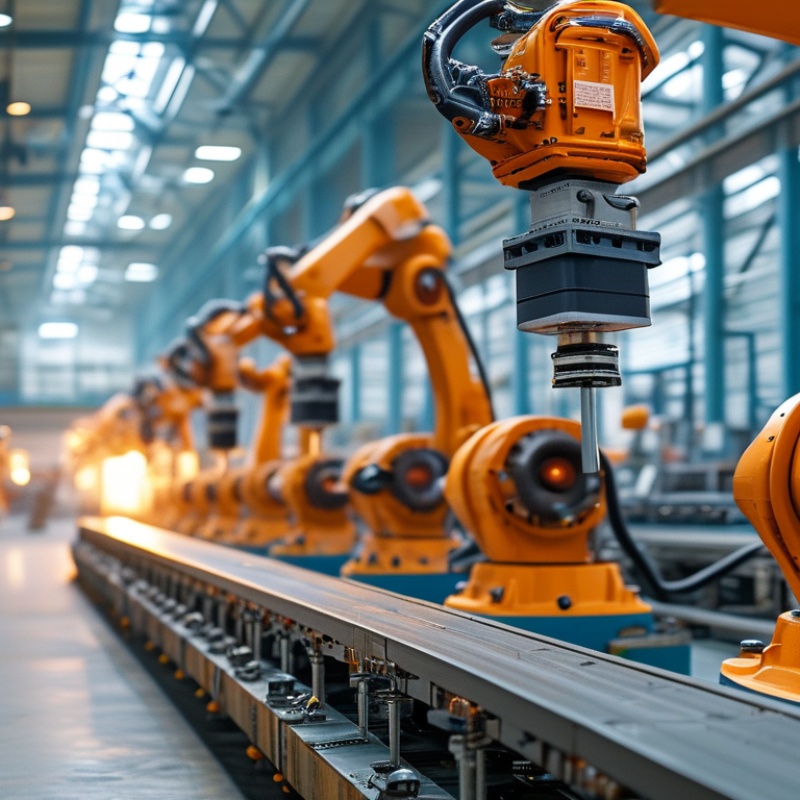
Key Advantages of Stepper Motors in Automation Applications
Stepper motors are essential in modern automation applications. Their precise control and repeatability make them ideal for tasks requiring accuracy. For example, they operate efficiently in 3D printers and CNC machines. Their ability to stop at exact angles allows for intricate designs and reliable performance. This precision reduces errors, which is crucial in high-stakes applications like medical devices.
Another significant advantage is their simplicity. Stepper motors maintain an open-loop control system. This means they do not require feedback systems, simplifying design and reducing costs. However, this also brings challenges. Without feedback, there's a risk of missing steps under heavy loads. It’s vital to consider the application’s demands. Users must analyze the torque requirements before implementation.
Energy efficiency is another highlight. Stepper motors use power only when moving, which can lead to lower energy consumption. Yet, heat generation may rise during prolonged usage. Understanding how to manage heat is essential, particularly in tightly packed machinery. Getting the most out of stepper motors involves awareness of these factors. Balancing performance, efficiency, and heat management can lead to successful automation solutions.
Precision Motion Control with Stepper Motors in Modern Machinery
Stepper motors are revolutionizing precision motion control in modern machinery. These motors operate by dividing a full rotation into smaller steps. This design allows for precise positioning, which is vital for applications like 3D printing and CNC machines. In industries like robotics and automation, the ability to control movement accurately enhances productivity.
Using stepper motors offers distinct advantages. They maintain their position when stationary, reducing the risk of errors. However, they can be susceptible to overheating with extended use. Engineers must balance performance and thermal limits. Proper cooling systems can mitigate these risks, ensuring that the motors function effectively under various conditions.
Another challenge is the resonance phenomenon. Misalignment in the system can lead to vibrations affecting precision. It's essential to assess application requirements carefully. Fine-tuning stepper motor parameters can improve performance and mitigate these issues. By understanding their limitations, industries can fully leverage the capabilities of stepper motors in complex machinery.
Energy Efficiency of Stepper Motors Compared to Traditional Drives
Stepper motors have transformed modern industries with their unique advantages, especially in energy efficiency. Unlike traditional drives, stepper motors can maintain their position without continuous power consumption. This characteristic minimizes energy use during idle times, making them a popular choice in applications like 3D printing and CNC machinery. Manufacturing processes now lean towards these motors to achieve cost savings.
Tips: To maximize energy efficiency, consider the motor's holding torque. This will help in reducing unnecessary power loss during operation.
Compared to conventional motors, stepper motors offer more precise control. This precision is crucial in applications requiring exact positioning. With lower energy requirements, they also generate less heat, leading to a more sustainable operation. However, some industries still rely on traditional drives due to their long-established reliability.
Tips: Assess the load requirements carefully. Ensuring the motor matches the application's demands can enhance operational efficiency.
Versatility of Stepper Motors Across Various Industrial Sectors
Stepper motors play a crucial role in various industrial sectors, showcasing their versatility. According to a recent report by the International Federation of Robotics, the demand for stepper motors in automation applications is projected to grow by 12% annually through 2025. This growth indicates their vital role in robotics and automated systems, where precision is essential.
In the medical industry, stepper motors are prominent in devices like MRI machines and robotic surgical tools. These motors ensure accurate positioning, which is critical for patient safety. A study published in the Journal of Medical Robotics shows that the implementation of stepper motors in surgical robots improved accuracy by over 30%. This improvement highlights their importance in enhancing surgical outcomes.
The packaging and textile industries also benefit significantly from stepper motors. They enable high-speed operations with precise control over movement. Recent surveys indicate that over 70% of textile production relies on automation, where stepper motors are integral for efficient material handling. Despite their advantages, challenges remain, such as heat generation and torque limitations at higher speeds. Manufacturers must address these issues for optimal performance in diverse applications.
Top Benefits of Using Stepper Motors in Modern Industries
Reduced Maintenance Requirements for Stepper Motors in Operations
Stepper motors have gained traction in various industries due to their unique advantages. One of the most notable benefits is their reduced maintenance requirements. Unlike traditional motors, stepper motors have fewer moving parts. This design leads to less wear and tear over time. With minimal mechanical friction, there are fewer breakdowns. This not only saves time but also lowers operational costs.
In many applications, stepper motors operate efficiently for extended periods without the need for frequent maintenance. This is particularly beneficial in automated systems where downtime can lead to significant losses. The reliability of stepper motors supports continuous operation, leading to smoother workflow. Yet, it is essential to monitor their performance. Even the most reliable systems can experience quirks, requiring attention to avoid potential issues.
Users should also consider the environmental factors affecting stepper motors. Dust, humidity, and temperature variations can impact their efficiency. While stepper motors demand less maintenance, they are not completely maintenance-free. Regular checks and adjustments are crucial. Acknowledging these factors ensures optimal performance while maintaining the benefits that these motors offer in modern industries.



 Daniel.Ding
 Ding
Ding