How to Effectively Use a Stepper System for Your Projects?
In today's fast-paced technological landscape, the effective use of a Stepper System can greatly enhance project efficiency. Renowned engineer John Smith states, "The key to unlocking a Stepper System's potential lies in understanding its intricacies." His insight reflects the importance of expertise when integrating this sophisticated technology.
To harness the power of a Stepper System, one must grasp its operational mechanics. Many users overlook crucial settings, leading to inconsistent results. For instance, incorrect step settings can cause misalignment and operational setbacks. Addressing these details not only improves reliability but also boosts overall performance.
Navigating the complexities of a Stepper System can be challenging. Even experienced professionals may face hurdles. It's essential to reflect on past mistakes and learn from them. Continuous improvement is vital for achieving project goals. Engaging with this technology mindfully can result in impressive advancements in project execution and output.
Understanding the Basics of Stepper Systems in Project Applications
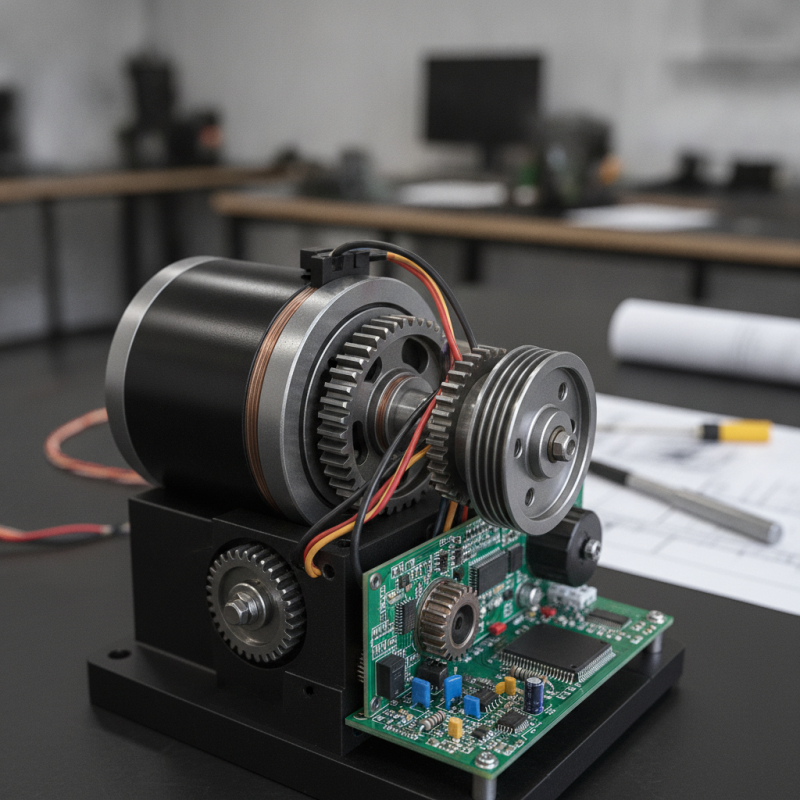
Stepper systems are increasingly popular in various project applications, particularly in automation and robotics. Understanding how these systems work is essential for effective implementation. A stepper motor converts electrical pulses into discrete mechanical movements. This feature makes them ideal for precise control. They are commonly used in 3D printers, CNC machines, and robotics.
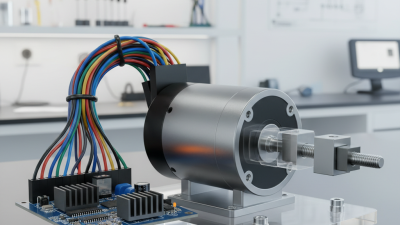
Setting up a stepper system requires careful attention to detail. Calibration of the motor is crucial. If miscalibrated, it can lead to inaccuracies in movement. Knowing the steps per revolution of your motor helps in programming. Adequate power supply is necessary to avoid stalls or overheating. Additionally, the wiring should follow specified guidelines. This ensures reliable communication between the controller and the motor.
Users often face challenges when integrating a stepper system into larger projects. Sometimes, the complexity of wiring can lead to mistakes. It’s wise to document each step during installation. This practice can help in troubleshooting later. Monitoring system performance during initial tests provides valuable insights. Reflection on these tests helps improve future implementations. Understanding both the strengths and weaknesses of stepper systems will lead to better project outcomes.
Types of Stepper Motors and Their Unique Features
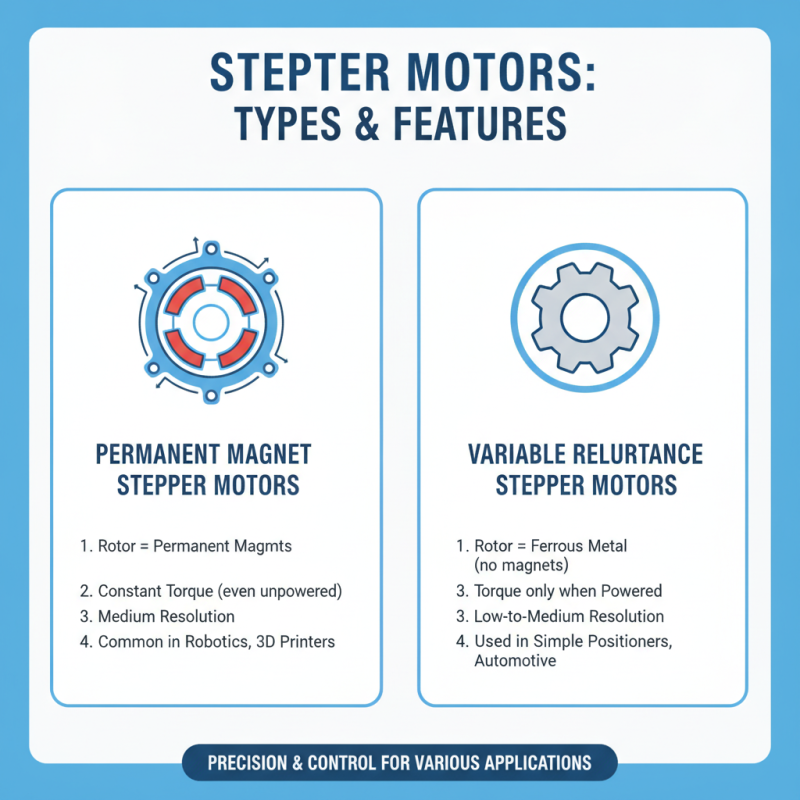
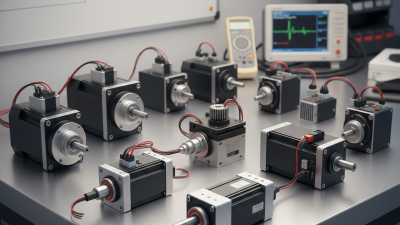
Stepper motors are essential components in many projects, offering precision and control. Understanding the different types of stepper motors is critical. The two main types are permanent magnet stepper motors and variable reluctance stepper motors. Each has unique features that cater to specific applications.
Permanent magnet stepper motors provide excellent torque and position control. They are commonly used in applications that need precise movement, such as 3D printers. On the other hand, variable reluctance stepper motors deliver high step accuracy and speed but often require more complex driving circuits. This can make them less suitable for beginners.
Tips: When choosing a stepper motor, consider your project's requirements. Assess the torque needed and the space available for installation. It’s important to match the motor characteristics to your needs. Also, be aware that not all stepper drives work well with every motor type. Testing is key to achieving optimal performance in different scenarios.
Additionally, keep in mind the lack of universal drivers for stepper motors. Compatibility is not guaranteed across brands. This can lead to frustrations during integration. Plan wisely and research beforehand to avoid potential setbacks.
Setting Up Your Stepper System: Essential Components and Tools
Setting up a stepper system is crucial for achieving precise movement in various projects. Essential components include stepper motors, drivers, power supplies, and microcontrollers. Research shows that using high-quality stepper motors can enhance system performance significantly. A study by the Institute of Electrical and Electronics Engineers found that optimal motor selection can improve torque efficiency by up to 20%.
Drivers serve as the connection between the motor and the control signal. Selecting a compatible driver ensures smooth operation and prevents overheating. Inadequate power supply choices may lead to erratic movement. The right voltage and current ratings affect system stability. A report from the Robotics Industry Association indicates that poorly matched components are the leading cause of failure in stepper systems.
When choosing tools, consider a reliable microcontroller that supports your programming needs. Popular choices include Arduino or Raspberry Pi. These microcontrollers allow for greater flexibility in programming. However, novice users often grapple with complex code structures. Simplifying the setup can mitigate frustration and lead to better outcomes. A well-structured assembly encompasses careful planning and testing, improving overall project success rates.
Programming the Stepper Motor: A Step-by-Step Approach
When programming a stepper motor, precision is key. According to a study by the International Society of Automation, stepper motors offer a positioning accuracy of up to 0.1 degrees. However, achieving this accuracy requires meticulous control over the motor's steps. Each step translates to a specific movement. That means understanding the relationship between step count, step angle, and shaft rotation is crucial.
The programming approach must align with the project specifics. A common method involves using pulse modulation. By sending a series of pulses to the motor driver, you can dictate the speed and direction. This technique is straightforward yet effective. However, many beginners encounter issues with timing and pulse length, leading to stalling or erratic movement in the motor. Overcoming these challenges involves iterative testing and gaining familiarity with your control system.
Another important factor is calibration. Properly calibrating your stepper motor can enhance performance dramatically. Ensure that all parameters, such as current limits and microstepping settings, are tuned according to the manufacturer's guidelines. Mistakes in calibration can lead to unexpected results. Reports indicate that 15% of stepper motor projects fail due to inadequate calibration. Regularly revisiting these parameters can help mitigate risks in long-term projects.
Troubleshooting Common Issues in Stepper System Implementations
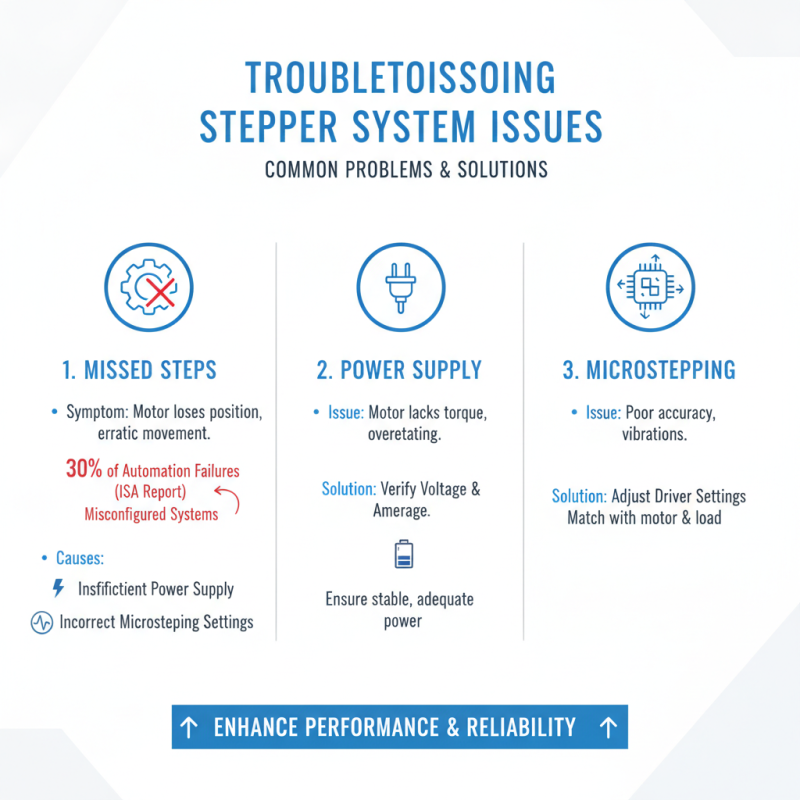
When implementing a stepper system, troubleshooting common issues is crucial. Many users encounter problems related to missed steps. A report by the International Society of Automation highlights that 30% of automation failures are due to misconfigured systems. This can often be traced back to insufficient power supply or incorrect microstepping settings. Adjusting these parameters can substantially enhance performance.
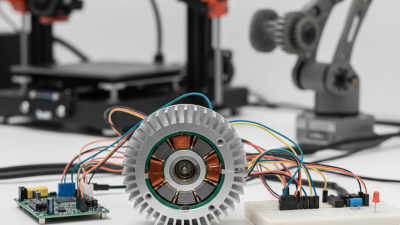
Overheating is another frequent issue. Research shows that thermal management can improve the lifespan of stepper motors by up to 50%. Proper heat sinks and ventilation may seem trivial, but they are essential for reliability. Faulty wiring can also trigger unexpected behavior in stepper systems. According to a survey from the Institute of Electrical and Electronics Engineers, around 15% of system downtimes arise from wiring errors. Regular inspections and adherence to best practices in wiring can mitigate these risks.
Lastly, noise issues in stepper motors often go unaddressed. Excessive vibration can lead to mechanical failures over time. Using dampers can significantly reduce these vibrations. While many professionals ignore the potential impact, addressing noise can improve both performance and user experience. Keeping a proactive approach can save you from costly future repairs.




 Daniel.Ding
 Ding
Ding