What is a Stepper Drive and How Does It Work?
In the world of automation, the Stepper Drive stands out for its precision and reliability. According to Dr. Emily Chen, a leading expert in motion control systems, “Stepper Drives are crucial for applications that require accurate positioning.” This statement encapsulates the essence of how these drives operate in various industries, from robotics to 3D printing.
Stepper Drives function by converting electrical pulses into precise mechanical movements. Each pulse triggers a specific step, making it possible to control the position of a motor with remarkable accuracy. This feature makes Stepper Drives an invaluable asset for tasks where precision is vital. However, despite their advantages, they can challenge in specific scenarios where higher speed or torque is required.
Understanding the mechanics of Stepper Drives allows engineers and operators to harness their full potential. With ongoing advancements and applications emerging, the reliability of Stepper Drives continues to evolve. Yet, one must remain aware of their limitations and seek continuous improvement in their implementation. Balancing technology and its shortcomings is key to mastering Stepper Drives in any operation.
What is a Stepper Drive?
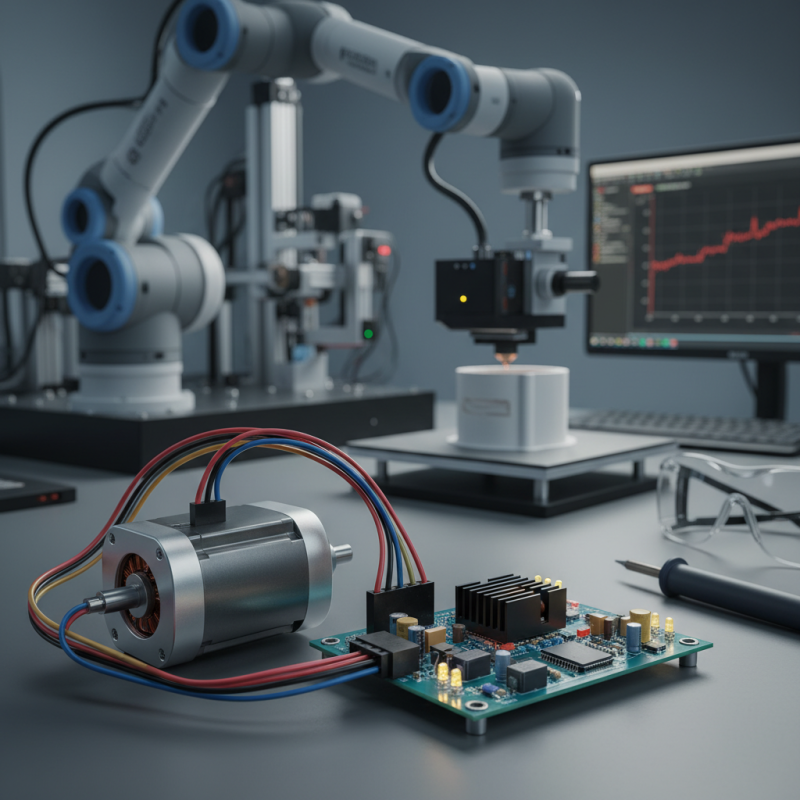
A stepper drive is an essential component in motion control systems. It enables precise control of the movement of motors. Stepper drives translate digital signals into movement. This allows for accurate positioning and repeats the same motion effectively. They are commonly used in 3D printers, CNC machines, and robotics.
The operation of a stepper drive is based on discrete steps. Each step corresponds to a specific movement of the motor shaft. By precisely controlling these steps, the driver can dictate the motor's speed and position. This level of control can lead to enhanced accuracy but may also introduce complexity. Fine-tuning a stepper drive can be challenging. Users often need to adjust parameters to optimize performance.
Stepper drives also face limitations. They can stall if overloaded, which leads to inaccuracies. Proper calibration is crucial for reliable operation. On the surface, stepper drives seem straightforward but require careful consideration. Understanding the requirements of your project will help ensure effective use. Without proper knowledge, one might overlook potential issues that can arise during operation.
Basic Principles of Stepper Motors
Stepper motors are specialized devices widely used in various automation applications. They offer precise control over position and speed, making them ideal for robotics and CNC machinery. The basic principle of stepper motors relies on electromagnetic forces. When energized, coils create magnetic fields, leading to rotor movement in discrete steps. This characteristic allows for repeatable positioning, essential in many engineering fields.
In industrial settings, stepper motors have an efficiency range between 70% and 90%. They utilize digital control methods, which enhance their accuracy. A recent report by the International Journal of Precision Engineering highlights that stepper drives provide resolution down to 1.8 degrees per step. This level of precision is crucial in applications that require tight tolerances. However, the torque of a stepper motor can drop significantly at higher speeds, which poses challenges in dynamic situations.
Tips: Always assess torque requirements for your application. Carefully consider the load when selecting a stepper motor. The right choice can prevent performance issues later.
Despite their advantages, stepper motors come with limitations. They can experience resonance at specific speeds, causing vibrations. This may affect precision and lead to wear over time. Regularly reviewing motor performance is essential. Understanding these nuances can improve system reliability.
Types of Stepper Drives
Stepper drives are essential components in automation and robotics. They serve as the interface between a controller and a stepper motor, converting digital signals into precise motor movements. There are several types of stepper drives, each designed for specific applications and performance needs.
Microstepping drives are a popular choice due to their capability to divide each step into smaller increments. This results in smoother motion and increased accuracy, making them ideal for precise positioning tasks. According to industry reports, microstepping can reduce vibration in motors by up to 70%. This improvement is crucial in applications like 3D printing and CNC machining, where precision is paramount.
Another type is the open-loop drive, which operates without feedback. It is simpler and often less expensive but may lack the precision of closed-loop systems. Closed-loop drives combine stepper motors with encoders, providing real-time feedback for improved performance. While these systems can achieve higher torque and better efficiency, they can also increase system complexity. The choice between these types ultimately depends on the specific requirements of the application, making it essential to evaluate the trade-offs involved.
Stepper Drive Types Comparison
How Stepper Drives Control Motion
Stepper drives are integral to controlling motion in various applications, such as robotics and CNC machines. They operate by dividing a full rotation into equal steps. Each pulse sent to the drive results in a precise movement. This accuracy is critical in industries that require high levels of precision, such as manufacturing and medical devices. The global market for stepper motors was valued at approximately $3 billion in 2021 and is projected to grow at a CAGR of around 6% through 2028, highlighting their increased adoption.
How do stepper drives control motion? They utilize open-loop control systems. Moving to a desired position occurs without feedback, simplifying design and reducing costs. Motors can achieve high precision with steps as small as 1.8 degrees. This makes them ideal for tasks requiring exact positioning. However, users must consider torque decrease at higher speeds. Underestimating this can lead to performance issues in applications.
Tips: Always assess load requirements before selecting a stepper drive. Consider testing under real conditions to ensure reliability. It's crucial to validate specifications and not only rely on theoretical data. Factors like heat dissipation also play a vital role in performance. Remember, a well-informed choice leads to better outcomes.
Applications of Stepper Drives in Industry
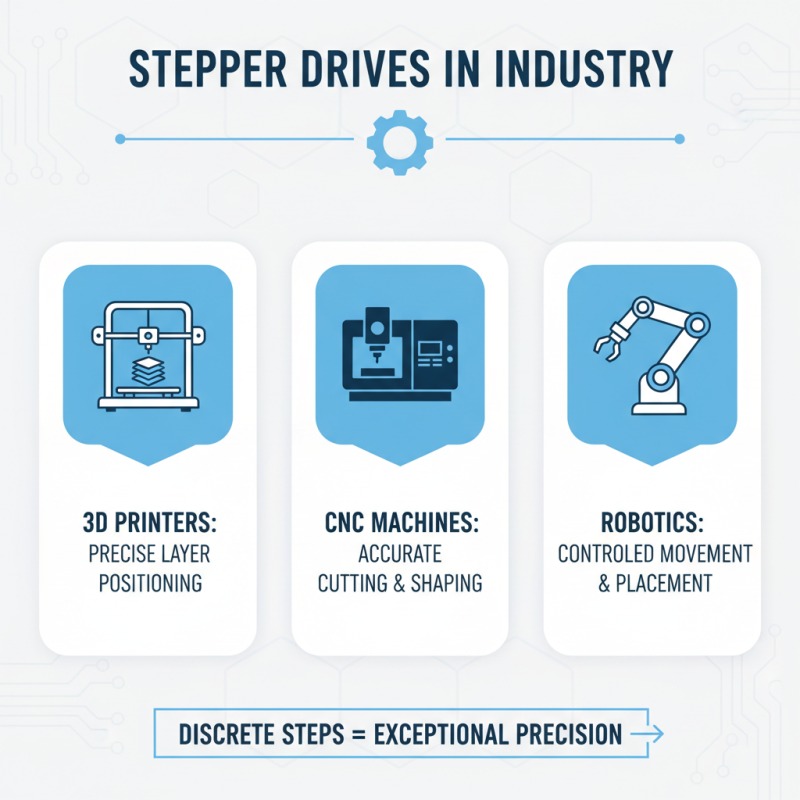
Stepper drives are pivotal in industrial automation. Their ability to control movement accurately makes them invaluable in various applications. Commonly used in 3D printers, CNC machines, and robotics, stepper drives provide precise positioning. They operate in discrete steps rather than continuous motion, allowing for remarkable precision.
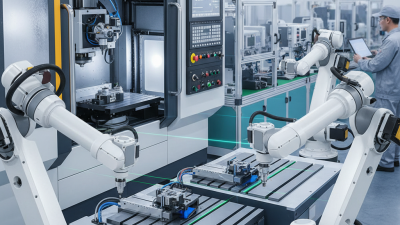
In packaging and assembly lines, stepper drives ensure consistent and reliable movement. They can control conveyor belts, align products, and manage robotic arms. Their adaptability means they fit a range of industries, from food processing to electronics manufacturing. However, this technology isn't without challenges. Heat management can become an issue, affecting the longevity of the equipment.
Another application lies in medical devices. Stepper drives facilitate precise movements in surgical instruments and imaging equipment. These devices require unmatched accuracy and reliability. Yet, the calibration process for stepper systems can be complex. Improper setup can lead to errors, impacting the entire workflow. Understanding the nuances is crucial for successful deployment in critical applications.



 Daniel.Ding
 Ding
Ding