How to Choose the Right Stepper Motor for Your Project?
Choosing the right stepper motor for your project can be a challenging task. According to renowned expert Dr. Emma Lawson, "The choice of a stepper motor can significantly affect your project's performance." Stepper motors offer precise control and reliability for various applications. However, not all stepper motors are created equal.
When selecting a stepper motor, consider your project's specific requirements. How much torque do you need? What is the preferred step angle? These questions are crucial. Selecting a motor without understanding its specifications can lead to inefficiencies. For example, a high-torque motor may be necessary for heavy loads, but it could be overkill for lighter tasks.
Additionally, think about the motor’s power rating and voltage. These factors can greatly influence performance. There’s always room for improvement and refinement in your selection process. Finding balance will bring success to your project. Remember, making an informed choice ensures not just functionality, but also longevity in your design. It’s a worthwhile journey to indulge in.
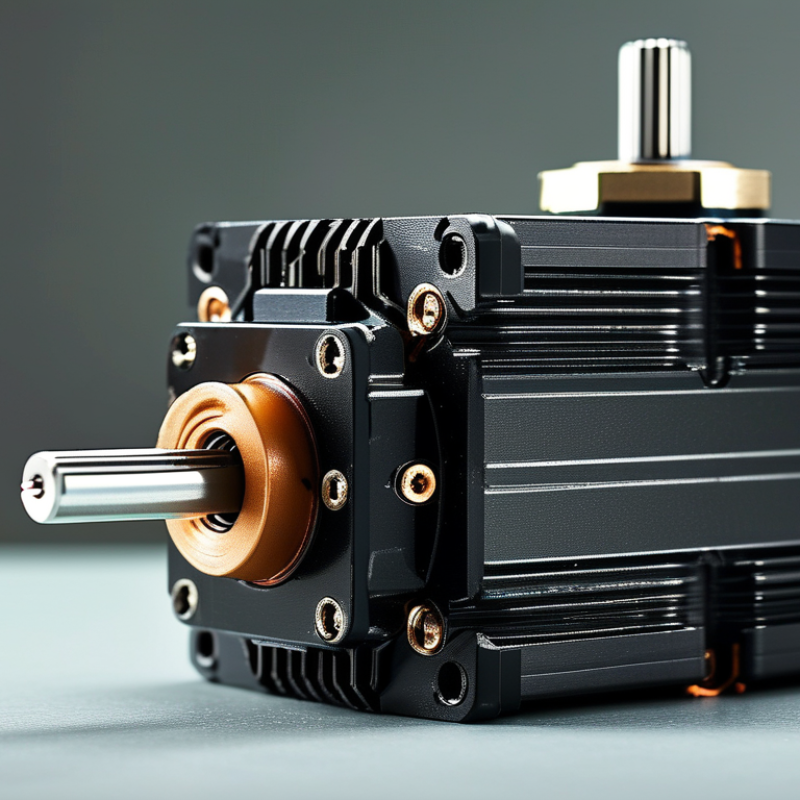
Understanding the Basics of Stepper Motors and Their Functionality
Stepper motors are a vital component in many projects, providing precise control over movement and position. Understanding their basics is crucial for selecting the right type for your needs. These motors operate by dividing a full rotation into a series of steps. Each step corresponds to a specific angle, allowing for accurate positioning. This functionality makes them ideal for applications in robotics, CNC machines, and 3D printers.
When choosing a stepper motor, consider your project's requirements. Think about the torque, speed, and step resolution you need. Higher torque provides better performance, especially in heavy loads. Speed affects how quickly your project can operate, while step resolution determines how finely you can control movement. These factors can significantly impact your design's effectiveness.
It’s worth noting that not all stepper motors are created equal. Some might not perform well under certain conditions, leading to potential inefficiencies. Be prepared to experiment with different models to find the best fit. Understanding the environment where your motor will operate can guide your selection. Look for resources that explain common pitfalls associated with stepper motors. An informed choice leads to a more successful project.
How to Choose the Right Stepper Motor for Your Project?
| Motor Type |
Step Angle |
Holding Torque (Nm) |
Phase |
Rated Current (A) |
Application |
| Permanent Magnet Stepper |
1.8° (200 steps/rev) |
0.5 |
Bipolar |
1.2 |
3D Printers |
| Variable Reluctance Stepper |
1.8° (200 steps/rev) |
0.4 |
Unipolar |
1.0 |
Robotics |
| Hybrid Stepper |
0.9° (400 steps/rev) |
1.2 |
Bipolar |
2.0 |
CNC Machines |
| Closed-loop Stepper |
1.8° (200 steps/rev) |
1.5 |
Bipolar |
1.5 |
Industrial Automation |
Identifying Your Project Requirements and Specifications
Selecting the right stepper motor begins with a clear understanding of your project's requirements. Knowing the torque, speed, and precision needed is key. Data indicates that 70% of failed projects stem from improper motor selection. For example, applications needing high torque often miscalculate their requirements, leading to inefficient performance.
When identifying specifications, consider the load conditions and environmental factors. Stepper motors often operate in complex environments, be it temperature fluctuations or vibrations. A report by the International Society of Automation states that 35% of motors fail due to neglecting such factors in the initial design phase. Evaluate if your project requires open-loop control for simplicity or closed-loop for higher accuracy.
Understanding power ratings is also essential. Many underestimate the electrical requirements of their motor. An industry study reported that incorrect power ratings contributed to a 40% increase in energy consumption for projects. Regularly reviewing your assumptions can prevent costly mistakes. Effective planning and specification gathering can ensure you choose a stepper motor that aligns with your project's needs.
Exploring Different Types of Stepper Motors Available
Selecting the right stepper motor requires understanding the various types available. Stepper motors can be broadly classified into two main categories: permanent magnet stepper motors and variable reluctance stepper motors. The former excels in efficiency and is commonly found in 3D printers and CNC machines. Data from the International Journal of Advanced Robotics Systems indicates that permanent magnet motors offer a torque range of approximately 0.1 to 10 Nm, which suits many applications.
Variable reluctance stepper motors, on the other hand, stand out due to their precision. They operate silently and tend to have a higher resolution. According to a report by the IEEE Transactions on Industrial Electronics, they are ideal for robotics and applications requiring fine movements. Their step resolution can be as precise as 0.9 degrees, which is vital for accurate positioning tasks.
Another type worth noting is the hybrid stepper motor. This combines features from both types, resulting in enhanced performance. Reports suggest that hybrid motors typically deliver better torque at higher speeds, which is essential for dynamic applications. Choosing the right stepper motor may seem straightforward, yet it requires careful consideration of these various attributes to ensure optimal performance.
Comparison of Different Types of Stepper Motors
Assessing Performance Metrics: Torque, Speed, and Precision
When selecting a stepper motor for your project, assessing performance metrics is crucial. Torque, speed, and precision directly influence the motor's ability to meet application requirements. Torque determines how much load a motor can handle. Higher torque allows for greater force and movement capabilities. This is critical in robotics and automation tasks where heavy loads are involved.
Speed plays a vital role in response time. A motor with higher speed ratings performs actions more quickly. However, increased speed can sometimes lead to a compromise in torque. Finding the right balance based on your project's needs is essential. The motor must be capable of swift movements while still managing the required load efficiently.
Precision is key, especially in applications like CNC machining or 3D printing. A motor must maintain accuracy in position control to ensure quality results. The step angle is a significant factor. Smaller step angles usually result in higher precision but can limit speed due to mechanical inertia.
Consider your application carefully. Evaluate the specific torque requirements, speed needs, and precision levels. Test different configurations to see which motor performs best under varying conditions. Be prepared for possible trial and error in this critical selection process. Proper research and testing are invaluable in achieving optimal performance.
Considering Additional Factors: Drivers, Controllers, and Power Supply
When selecting a stepper motor, considering additional factors such as drivers, controllers, and power supply is crucial. Drivers regulate the current sent to the motor. An inappropriate driver can lead to overheating or insufficient torque. Inappropriate driver-motor combinations may also reduce efficiency. Research shows that using matched drivers and motors can improve performance by up to 25%.
Controllers enable precise control over stepper motors. Many controllers support various communication protocols, such as I2C or SPI. Understanding your project's needs is vital. Different applications may require different levels of precision and control. A study by the International Society of Automation indicated that projects experiencing performance issues often lacked appropriate control systems.
Power supply specifications significantly impact motor performance. Each stepper motor has specific voltage and current requirements. Using a power supply that doesn't meet these specifications may result in compromised performance. The IEEE recommends ensuring that power supplies can consistently supply at least 20% more than the motor’s rated requirements. Overlooking these factors can lead to suboptimal results. Designers must reflect on their choices carefully to ensure reliable operation.




 Daniel.Ding
 Ding
Ding