get quote
Leave Your Message

China Top Brake Motor Suppliers How to Choose?

Choosing among China’s top Brake Motor suppliers requires more than comparing catalog prices. A reliable decision begins with the application. A hoist, conveyor, machine tool, and parking gate need different braking performance. Load weight, stopping frequency, shaft speed, voltage, ambient temperature, and mounting position all matter.

Dr. Austin Hughes, a respected electric-drive engineer and author, states, “The motor is the heart of the drive system.” His observation also applies to the brake assembly. A brake motor is not merely a motor with an added stopping device. It is a coordinated system involving torque, thermal capacity, brake response, wear resistance, and control compatibility. Small details matter. A 0.75 kW motor may suit a light conveyor but fail under repeated lifting cycles. A brake rated for static holding may not provide suitable emergency stopping performance.

Experience at the factory level can reveal what brochures hide. Ask suppliers for rated torque, braking torque, duty cycle, insulation class, protection rating, brake clearance, and test records. Check whether the sample matches the production model. Confirm CE, UL, or other applicable compliance documents for your target market. A factory audit can expose weak winding protection, inconsistent assembly, or limited quality control.

Price still matters. It should not lead the decision. I have seen buyers focus on purchase cost and later face noisy brakes, delayed spare parts, and difficult commissioning. That approach needs reconsideration. Supplier selection should balance engineering support, production consistency, customization ability, delivery reliability, and after-sales service. The strongest supplier is not always the largest one. It is the one that can prove performance clearly.
China Top Brake Motor Suppliers How to Choose?

What Is a Brake Motor and Why Does Supplier Selection Matter?

China Top Brake Motor Suppliers: How to Choose?

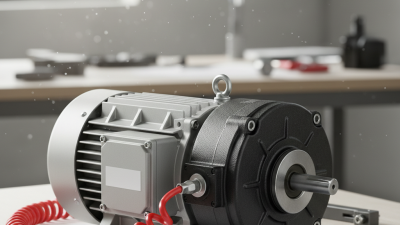
A brake motor combines an electric motor with an integrated braking unit. The brake usually applies spring force and releases through electromagnetic power. It stops rotating equipment quickly when power fails. This design supports hoists, conveyors, machine tools, and automated doors. Safety depends on correct sizing, not appearance.

The IEA’s Energy Efficiency 2023 report estimates that electric motor systems consume about 53% of global electricity. Small efficiency losses can therefore become costly across continuous operations. Ask suppliers for rated power, braking torque, duty cycle, insulation class, and thermal data. IEC 60034-1 covers motor ratings and duty types, including S1 and S3. IEC 60529 helps verify enclosure protection through IP ratings. These details matter in dusty workshops and humid production areas.

Supplier selection should include practical evidence. Request routine test records, dimensional drawings, brake response data, and traceable component information. Check whether the supplier can match voltage, mounting position, shaft size, and ambient temperature. A catalog may look complete. It may still hide weak documentation. Field checks often reveal mismatched brake torque or poor adjustment access. I would also inspect spare-part availability and technical response time before ordering. A sample load test can expose noise, overheating, or delayed stopping that factory photographs never show. Price matters, but an unverified brake motor can create longer downtime and higher maintenance costs.
Which Brake Motor Specifications Should Buyers Compare?

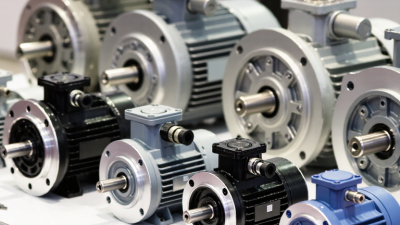
When comparing brake motors from Chinese suppliers, buyers should examine more than rated power. A 7.5 kW motor may still fail if its braking torque is too low. Match the motor torque, brake torque, load inertia, and stopping frequency. Torque matters. Ask for the brake’s rated holding torque in newton-metres, not only its power rating.

Check voltage, frequency, phase, insulation class, duty cycle, and rated speed. A motor designed for 400 V and 50 Hz may need different performance at 460 V and 60 Hz. Confirm the starting current and thermal margin for repeated starts. For lifting equipment, compare stopping time and emergency braking behavior. A quick response is useful, but excessive braking can damage couplings and gears. The correct brake gap also affects reliability. Request the factory’s adjustment range and maintenance procedure.

Physical specifications deserve equal attention. Compare shaft diameter, mounting dimensions, keyway size, cable entry, enclosure rating, and cooling method. In dusty workshops, a suitable IP rating can prevent moisture and particles from reaching the brake assembly. Request load-test records, insulation resistance results, and dimensional drawings before approval. I have seen buyers accept a lower price, then discover incompatible mounting holes. That mistake is avoidable. Supplier claims still need verification. Ask for sample testing under your actual load, ambient temperature, and stopping cycle. Some specifications look impressive on paper. Field conditions are less polite.

How to Evaluate China’s Brake Motor Suppliers

Choosing a Chinese brake motor supplier requires more than comparing catalog prices. Start by checking manufacturing experience, engineering staff, and production capacity. Ask for drawings, material specifications, and a clear explanation of the braking system. A credible supplier should explain rated torque, stopping time, insulation class, and duty cycle in plain language. Request recent test records, not only promotional claims. Photos of a real assembly line can help, but they are not proof.

Evaluate sample motors under conditions close to your application. Measure starting current, braking distance, noise, temperature rise, and repeated stopping performance. Test the motor after heat builds up. Cold samples can hide weaknesses. Confirm how the supplier controls coil winding, rotor balance, seal quality, and brake clearance. Ask whether each batch receives electrical and mechanical inspection. Traceable serial numbers and signed reports improve accountability. Small details matter.

Communication is another practical test. Send one technical question and observe the reply. Does an engineer answer directly, or does a salesperson avoid measurements? Clarify lead times, spare parts, packaging, warranty handling, and corrective actions before placing an order. A low quotation may exclude testing, custom tooling, or protective packing. That can become an expensive surprise. Supplier evaluation is never perfect. Recheck assumptions after the first shipment, because field conditions often expose issues that factory samples miss.

What Quality, Certification, and Safety Checks Are Essential?

China Top Brake Motor Suppliers: How to Choose?

Brake motors deserve stricter checks than ordinary motors. The IEA reports that electric motors consume nearly half of global electricity. Efficiency and reliability therefore affect operating costs significantly. Ask suppliers for test records under IEC 60034 standards, not only product brochures. Check rated power, duty cycle, insulation class, noise, vibration, and braking torque. The brake should stop the load consistently after repeated cycles. One successful factory test is not enough.

Certification needs careful reading. ISO 9001 shows a quality management system, but it does not guarantee every motor is reliable. Request the certificate number, issuing body, scope, and expiry date. Verify CE or other required conformity documents for your market. Check IP protection under IEC 60034-5, especially where dust, oil, or water is present. For hazardous work areas, demand the correct certified design. A copied certificate can mislead. I have seen documents that looked complete but covered a different product range.

Tips: Ask for a sample motor and inspect its nameplate, terminal box, brake lining, and manual release mechanism. Measure stopping time with the intended load. Confirm spring-applied braking, emergency release behavior, and brake wear limits. Review traceable test reports for temperature rise and insulation resistance. Also audit production records, calibration dates, spare-part access, and warranty terms. Do not ignore installation support. A strong supplier should explain failure modes clearly, even when the answer is inconvenient. Some specifications remain uncertain until field testing.

How to Compare Pricing, Delivery, Warranty, and Technical Support

China Top Brake Motor Suppliers: How to Choose?

Choosing among China-based brake motor suppliers requires more than comparing unit prices. The International Energy Agency reported that electric motor-driven systems consumed about 53% of global electricity. Efficiency, therefore, affects long-term operating costs. Request a complete quotation covering motor power, brake torque, insulation class, protection rating, testing, packaging, and spare parts. A cheaper motor may require costly rewiring or earlier replacement. Pricing needs context.

Delivery deserves the same scrutiny. The World Bank’s 2023 Logistics Performance Index reported that international shipments took 44 days on average from port entry to final destination. Ask for production lead time, inspection time, port location, shipping terms, and delay procedures. Confirm whether delivery dates are contractual or merely estimated. I once treated a “ready stock” statement as a firm promise. It was not.

Warranty terms should specify coverage, claim evidence, repair location, response time, and replacement responsibility. Check whether the warranty includes the brake assembly, bearings, and control components. Technical support should offer wiring diagrams, installation guidance, brake adjustment instructions, and fault analysis. Ask how quickly engineers respond across time zones. Request sample test records, load-cycle results, and temperature data. These details reveal engineering discipline better than polished brochures. Some suppliers may resist detailed questions. That is a useful warning. A practical comparison sheet can score price, delivery reliability, warranty clarity, and support response separately. Otherwise, personal impressions may quietly distort the decision.

China Top Brake Motor Suppliers: How to Choose? — Comparing Pricing, Delivery, Warranty, and Technical Support

Comparison Dimension Supplier A
Cost-Focused
Supplier B
Export-Oriented
Supplier C
Engineering-Focused
Supplier D
Flexible Customization
Typical Product Range Three-phase electromagnetic brake motors, approximately 0.12–22 kW IE2 and IE3 brake motors, approximately 0.12–30 kW IE3 brake motors and geared brake motors, approximately 0.37–45 kW Standard and customized brake motors, approximately 0.12–37 kW
Indicative Unit Price US$120–1,250 for standard models US$145–1,600 for standard models US$190–2,100 for standard or engineered models US$160–1,850, depending on customization
Price Position Low Low to medium Medium to high Medium
Minimum Order Quantity Usually 1–5 units for standard models Usually 1–10 units for standard models Usually 1–5 units; project orders may have separate terms Usually 1 unit for standard models; customized orders may require a batch
Sample Availability Usually available for standard models Usually available with model confirmation Available after technical specification review Available for standard products; custom samples require approval
Standard-Model Lead Time 7–15 calendar days 10–20 calendar days 15–30 calendar days 10–25 calendar days
Customized-Model Lead Time 25–40 calendar days 30–45 calendar days 35–60 calendar days 25–50 calendar days
Common Shipping Options Sea freight, air freight, and express delivery Sea freight, air freight, rail, and express delivery Sea freight, rail, air freight, and project logistics Sea freight, air freight, and express delivery
Production Capacity Suitable for small and medium batch orders Suitable for repeat export orders and medium batches Suitable for medium and large project orders Suitable for small batches and mixed specifications
Typical Warranty 12 months from shipment or 12 months from installation, subject to contract 12–18 months, subject to contract and operating conditions 18–24 months for approved applications, subject to contract 12–18 months, with customized terms available
Warranty Coverage Manufacturing defects under normal operating conditions Manufacturing defects and agreed replacement parts Manufacturing defects, agreed components, and documented application conditions Manufacturing defects and approved customized components
Technical Documentation Datasheets, wiring diagrams, and installation instructions Datasheets, dimensional drawings, wiring diagrams, and packing details Datasheets, performance curves, drawings, brake calculations, and application notes Datasheets, drawings, and customized technical files after order confirmation
Certification Documentation Commonly available: CE-related documents and factory test records when requested Commonly available: CE-related documents, test records, and export documents when requested Commonly available: CE-related documents, test records, and project-specific technical files Commonly available: CE-related documents and product test records when requested
Factory Testing Routine inspection of insulation, voltage, current, rotation, and braking function Routine inspection plus order-based test records Routine inspection plus application-specific testing when agreed Routine inspection; customized tests available by quotation
Response Time for Technical Questions Usually within 1–2 business days Usually within 1 business day Usually within 1 business day for project inquiries Usually within 1–2 business days
After-Sales Support Remote troubleshooting and spare-parts recommendations Remote troubleshooting, documentation support, and spare-parts recommendations Application review, commissioning guidance, troubleshooting, and replacement planning Remote troubleshooting and customization-related support
Best Fit Price-sensitive standard applications and replacement orders Regular export purchases requiring balanced logistics and documentation Heavy-duty, engineered, or technically demanding applications Mixed orders requiring dimensions, voltage, brake torque, or shaft changes
Overall Comparison ★★★★☆
Strong price advantage; verify documentation and delivery commitments
★★★★☆
Higher cost but stronger engineering support and project capability
★★★★☆
Flexible for customized requirements; confirm sample and batch lead times

Note: Prices, lead times, warranty periods, and service levels are indicative market ranges for China-made brake motors and should be confirmed in a written quotation. Final conditions depend on motor power, frame size, voltage, frequency, brake torque, protection rating, efficiency class, customization, order quantity, inspection requirements, and shipping destination.

Recommended Supplier Evaluation Criteria
Evaluation Area What to Confirm Before Ordering Suggested Importance
Total Landed Cost Product price, tooling, packaging, inspection fees, freight, insurance, duties, and local delivery 25%
Delivery Reliability Confirmed production schedule, stock status, shipping method, export experience, and delay procedure 20%
Technical Compatibility Power, voltage, frequency, frame size, mounting, shaft dimensions, brake torque, duty cycle, and IP rating 20%
Warranty and Quality Control Warranty start date, exclusions, claim process, test records, replacement policy, and spare-parts availability 20%
Technical Support Response time, language capability, drawings, commissioning assistance, troubleshooting, and application engineering 15%