How to Choose the Right Brake Motor for Your Application?
Choosing the right brake motor is crucial for the efficiency of many applications. A brake motor combines a motor with a braking system, ensuring that machinery operates safely and effectively. Selecting the correct model can impact performance, safety, and operational costs.
Many factors influence the choice of a brake motor. Load requirements, speed, and torque specifications should always be considered. A common mistake is overlooking the environmental conditions where the motor will be used. Extreme temperatures or exposure to dust can hinder the motor's performance.
Consulting with experts may provide insights. However, individuals should also rely on their experiences and observations. Every application is unique, and what works for one situation may not be suitable for another. Reflecting on past choices can help refine future decisions, leading to improved operational outcomes.
Understanding the Basics of Brake Motors and Their Applications
Brake motors play a crucial role in various applications, providing controlled stopping power. Understanding their basic functions is essential. These motors combine electrical and mechanical systems to offer both drive and braking capabilities. They are commonly used in conveyor systems, cranes, and industrial machinery. Having the right brake motor can significantly enhance operational efficiency and safety.
The choice of a brake motor depends on several factors. Load demand, speed requirements, and application environment must be considered. For example, a motor in a heavy-duty industrial setting might need a higher torque rating. Smaller applications, like packaging machines, may prioritize speed over power. Each application presents unique challenges, necessitating thoughtful evaluation and planning.
In some cases, brake motors may not perform optimally. Factors like installation environment or load variations can affect performance. It’s important to reflect on past experiences when selecting a motor. A careful review of existing applications can lead to better choices in the future. Emphasizing the right specifications ensures both reliability and efficiency.
Identifying Key Factors for Selecting the Right Brake Motor
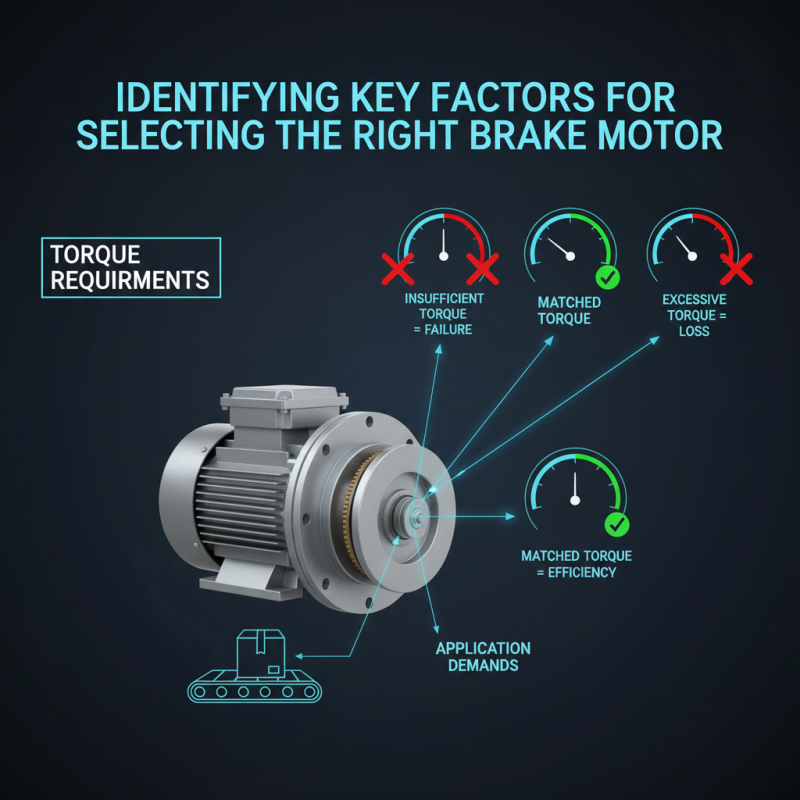
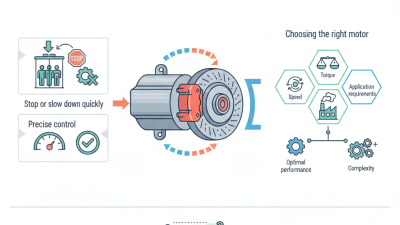
When selecting the right brake motor for your application, consider several key factors. First, assess the torque requirements. Different applications need various torque levels. A motor that lacks sufficient torque can lead to failure. On the other hand, excessive torque can cause efficiency loss. Thus, it’s vital to match the motor’s output to the specific demands of your system.
Next, consider the environment. Brake motors can be exposed to dust, moisture, or extreme temperatures. Ensure that your chosen motor can withstand these conditions. Look for materials and enclosures designed for various environments. Still, it’s essential to remember that even the most robust motors might face unexpected challenges. Maintenance plans should be in place to address potential issues before they escalate.
Another factor is the power supply specifications. Make sure the motor aligns with your voltage and frequency requirements. Mismatched specifications can lead to inefficiency or damage. Additionally, think about the installation process. Some motors may require more intricate setups than others. These details can complicate your project if not considered thoroughly.
Evaluating Motor Specifications: Torque, Speed, and Power Requirements
Selecting the right brake motor demands careful consideration of torque, speed, and power requirements. Torque is crucial for determining how much load the motor can handle. High torque motors are necessary for heavy applications. These motors can move large objects without straining. However, overestimating torque can lead to inefficiencies and higher costs.
Speed matters too. Different applications require varying speeds. For instance, a conveyor system may need a steady, slow movement. In contrast, an electric vehicle may require rapid acceleration. It’s essential to match the motor speed to the system's needs. Miscalculating speed can result in sluggish performance or mechanical failure.
Power requirements further complicate the selection process. Understanding the power needed for your application helps prevent overheating and extend motor life. Too little power can lead to underperformance, while excess power will waste energy. Finding a balance is key but often overlooked in the decision-making process. Each application is unique, and a one-size-fits-all approach can be detrimental.
Assessing Environmental Conditions and Mounting Options
Choosing the right brake motor involves understanding your application's specific requirements. Assessing
environmental conditions is crucial. Factors such as
temperature, humidity, and exposure to dust or chemicals can impact performance.
For example, motors operating in temperatures above 40°C may
require special insulation to avoid overheating. Reports indicate that environmental stress can reduce motor life by 20%, highlighting the
importance of appropriate selections.
Mounting options also significantly affect brake motor performance. Vertical, horizontal, or angled positions can alter
how forces distribute. Each configuration may present unique mounting challenges. A recent industry study noted that
improper mounting increases vibration, leading to a potential
15% efficiency loss. Selecting a motor designed for specific mounting configurations can mitigate these risks. This analysis
reveals that careful consideration of these factors is essential for ensuring optimal operation and longevity of your brake motor.
Comparing Brake Motor Types: AC vs. DC and Other Considerations
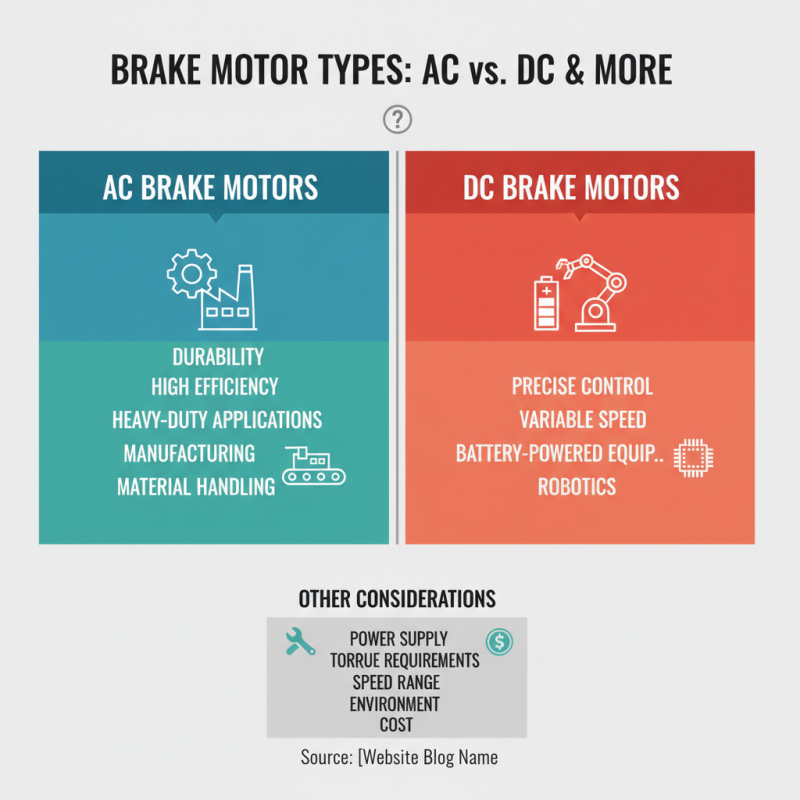
When selecting a brake motor, understanding the characteristics of AC and DC motors is crucial. AC motors are generally known for their durability and efficiency. They are often used in heavy-duty applications. This makes them a popular choice in industries like manufacturing and material handling.
On the other hand, DC motors provide greater torque at lower speeds. They are suitable for applications that require precision control and quick response. However, they may require more maintenance than AC motors. Evaluating the specific needs of your application will guide you in making the right choice.
Other considerations include the operating environment and power supply. If your application has limited space, a compact model may be necessary. Evaluate the feasibility of power sources in your location. It's also essential to reflect on how often the motor will be used. High-frequency use could lead to wear and impact longevity. Ultimately, understanding these factors will lead to a more informed decision.



 Daniel.Ding
 Ding
Ding