Best Stepper Motor Types in 2026 for Buyers?
Choosing the best Stepper Motor in 2026 requires more than comparing prices or holding torque figures. Buyers must match motor design with the machine’s real workload, speed range, control system, and operating environment. A compact 3D printer may need a quiet hybrid stepper motor, while a packaging machine may require stronger torque, closed-loop feedback, and improved heat management. The right choice depends on practical conditions.
This guide examines the main Stepper Motor types available to buyers, including permanent magnet, variable reluctance, hybrid, geared, and closed-loop models. It also considers frame size, phase configuration, voltage, current, microstepping, accuracy, noise, and duty cycle. These details matter on the factory floor. A motor that performs smoothly during a five-minute test may overheat after eight hours of continuous operation. Real results can differ.
Specifications are useful. They are not enough.
Drawing on engineering principles, manufacturer data, and common application experience, this overview explains where each motor type performs best. It also highlights trade-offs that product pages often hide, such as resonance, missed steps, inefficient drivers, and limited high-speed torque. Buyers should verify test conditions before trusting impressive numbers. I may favor hybrid and closed-loop designs for many modern systems, but that preference is not universal. Budget, maintenance access, load variation, and installation space can change the decision. The goal is not to name one perfect motor. It is to identify the most dependable fit for each application in 2026.
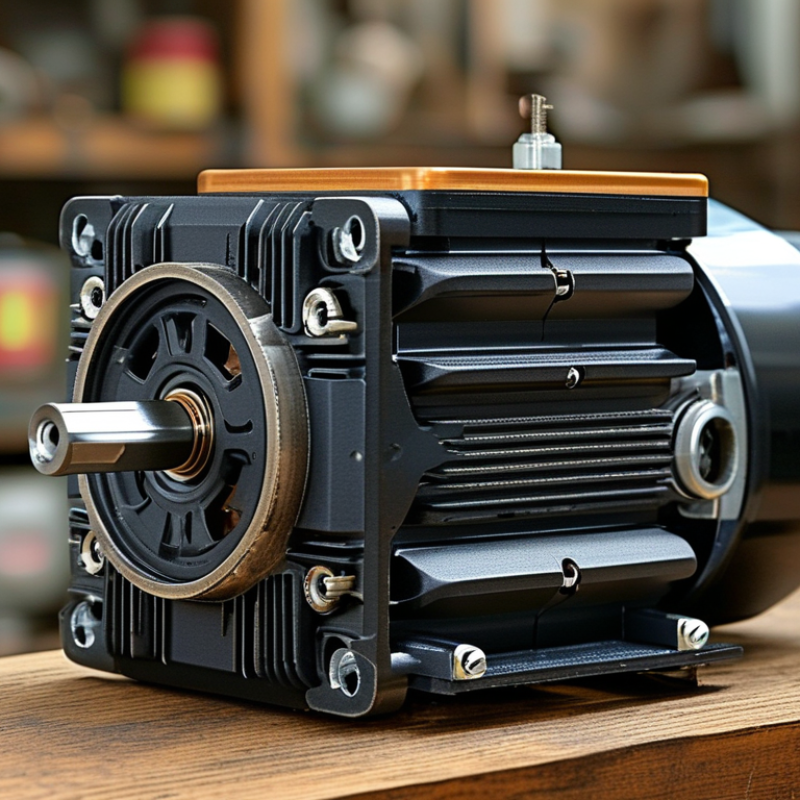
Stepper Motor Fundamentals: 1.8° vs 0.9° Step Angles in Motion Control
Best Stepper Motor Types in 2026 for Buyers?
Stepper motors with 1.8° step angles complete 200 full steps per revolution. They offer a practical balance between torque, speed, cost, and control simplicity. A 0.9° motor provides 400 full steps per revolution, creating finer position increments. This can reduce visible vibration in cameras, compact stages, and precision feeders. However, a smaller step angle does not automatically deliver better accuracy. Bearing play, frame stiffness, driver quality, and load changes still matter.
In real motion-control testing, 1.8° motors often suit general automation and moderate-speed movement. The 0.9° option becomes more attractive when smoother travel or reduced mechanical ripple matters. It usually demands more command pulses, so the controller must handle higher pulse frequencies. Torque also varies by motor design, not step angle alone. That detail is easy to overlook.
Tips: Compare holding torque at the actual operating speed, not only the catalogue value. Test acceleration, heat, noise, and missed steps under the real load. Microstepping can improve smoothness, but it cannot repair a flexible mount. I would also leave a safety margin. A motor that works perfectly on the bench may struggle after belts, couplings, and friction are added.
Hybrid Stepper Motors: NEMA 17 and NEMA 23 Torque Selection
Best Stepper Motor Types in 2026 for Buyers?
Hybrid stepper motors remain practical for precise positioning in printers, compact CNC equipment, and automation stages. NEMA 17 and NEMA 23 describe mounting dimensions, not guaranteed torque. A typical NEMA 17 delivers about 0.3–0.7 N·m, while many NEMA 23 models provide roughly 0.8–2.5 N·m. Actual values vary by winding, voltage, and speed.
Check the load first.
Grand View Research valued the global stepper motor market at approximately USD 4.7 billion in 2023 and expects continued growth through 2030. This expansion reflects rising demand for controlled motion systems. However, market growth does not replace engineering checks. Calculate load torque, friction, acceleration, and vertical force. Then add a realistic safety margin, often 30–50%. A motor rated at 1.2 N·m may lose much of that torque during fast movement.
Use holding torque carefully.
It describes a stationary condition, not reliable running performance. Review the torque-speed curve at your intended pulse rate. A NEMA 17 suits lighter mechanisms with short belts and modest acceleration. Choose NEMA 23 when the table, screw, or payload creates higher inertia. Larger is not always better. It can increase heat, power demand, and vibration.
MarketsandMarkets identifies industrial automation as a major stepper motor application area. In practice, thermal testing still matters.
I once treated the datasheet rating as a working guarantee. That was too optimistic.
Torque, Speed, and Accuracy: Evaluating Holding Torque and ±5% Error
Choosing a stepper motor in 2026 requires more than comparing frame size or advertised torque. Holding torque describes resistance while the shaft is stopped. It does not equal usable torque during acceleration. A motor rated at 2.0 N·m may lose substantial torque at higher speeds.
The International Federation of Robotics reported 541,302 industrial robot installations in 2023. This growth increases demand for repeatable, compact motion systems. Buyers should compare torque-speed curves, not single holding-torque figures. Hybrid steppers usually provide stronger positioning control than basic permanent-magnet designs. Closed-loop stepper systems add feedback and can correct missed motion, although they cost more and still need careful tuning.
A ±5% error claim needs scrutiny. Is it position error, torque tolerance, or measurement uncertainty? These are different problems. Under controlled conditions, a ±5% positioning target may be reasonable for many indexing tasks. However, backlash, belt stretch, heat, load inertia, and microstepping can widen the real result. Test the motor near its intended load, speed, temperature, and duty cycle. Measure several cycles.
The U.S. Department of Energy notes that motor-driven systems represent a major share of industrial electricity use, so oversized motors can create avoidable losses. Smaller is not always better. I would also question catalog torque values measured at zero speed. That figure looks impressive, but it can mislead buyers selecting a fast axis.
2026 Buyer’s Matrix: Matching Motor Type, Load, Voltage, and Duty Cycle
Choosing a stepper motor in 2026 starts with the load, not the catalogue headline. A hybrid stepper suits moderate torque and precise positioning, while a permanent-magnet type fits lighter mechanisms. Variable-reluctance designs can reduce rotor inertia, but their holding torque is usually lower. Measure acceleration, friction, and vertical load separately. Do not size from rated torque alone.
Voltage changes the practical result. A higher supply voltage helps current rise faster, preserving torque at higher speed. The driver must still match the motor’s current rating. For intermittent indexing, a motor near its torque curve can work efficiently. Continuous duty needs thermal margin, especially inside a sealed cabinet. The International Energy Agency reports that motor-driven systems consume about 53% of global electricity, making efficiency and heat management more than paperwork. Small losses accumulate.
A buyer’s matrix should map type, load, voltage, and duty cycle in one row. For example, a 2-kilogram vertical slide may need a geared hybrid stepper, a 24–48 VDC driver, and a holding brake. A low-load camera axis may need only a compact permanent-magnet motor. IEC 60034-1 provides a useful framework for rating and temperature checks, while the U.S. Department of Energy’s motor-system assessments emphasize system-level selection. Field reality is less tidy. Cable length, resonance, and missed steps can defeat a theoretically correct choice. I would prototype at the worst temperature and highest acceleration, then review the result honestly.JSImport





 Daniel.Ding
 Ding
Ding