7 Tips for Choosing the Right Stepper System
Choosing the right Stepper System can determine whether a machine runs smoothly or struggles with noise, heat, and missed positions. The decision reaches beyond motor size. It includes torque, speed, driver compatibility, control method, wiring, load conditions, and the working environment.
Peter Nachtwey, a veteran motion-control engineer, puts it plainly: “The motor is only one part of the motion system.” That observation deserves attention. A compact motor may look suitable on a specification sheet, yet fail when a conveyor accelerates, a leadscrew carries an uneven load, or a machine operates continuously for eight hours.
This guide presents seven practical tips for evaluating a Stepper System with greater confidence. You will consider holding torque, usable speed, microstepping, thermal limits, feedback options, and controller integration. Real application details matter. A 3D printer, packaging machine, laboratory stage, and CNC axis do not demand the same solution.
Small details matter.
Measure the load at the shaft. Check the driver’s current range. Watch the motor temperature after sustained operation. These steps can expose weaknesses before installation becomes expensive. Still, no selection guide can replace testing under actual conditions. That is where many recommendations become imperfect.
A sensible choice balances performance, reliability, budget, and future maintenance. The cheapest system may create vibration, downtime, or repeated adjustments. The most powerful option may waste energy and exceed the machine’s needs. Use these tips as a structured starting point, then validate the final Stepper System through careful calculations and practical trials.
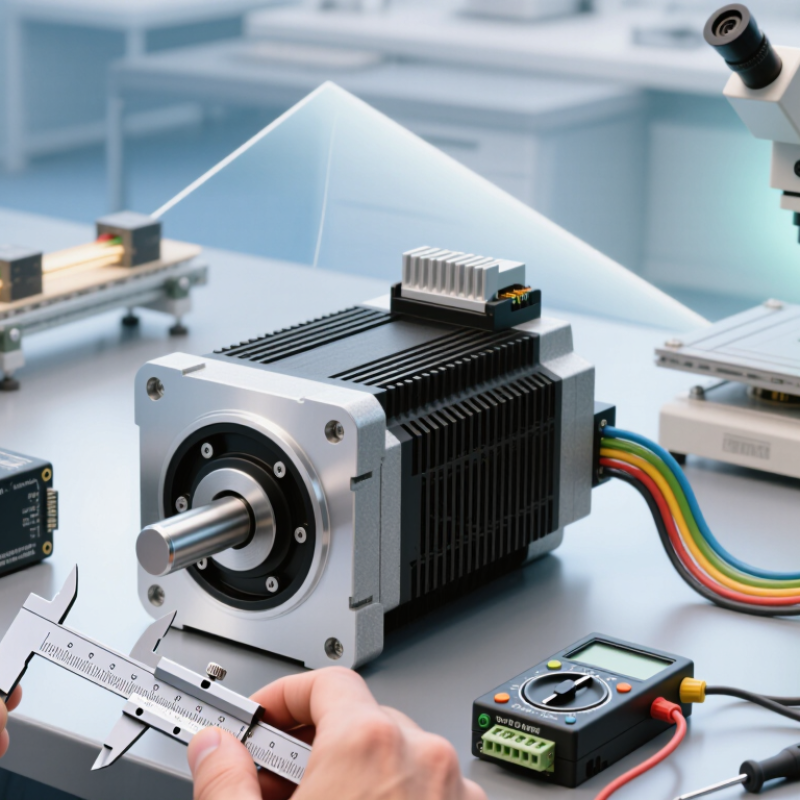
Stepper System Basics: Motor Types, Drivers, and Control Methods
7 Tips for Choosing the Right Stepper System
Stepper System Basics: Motor Types, Drivers, and Control Methods
Choosing a stepper system starts with the motor’s physical behavior. Hybrid stepper motors provide strong holding torque and accurate positioning. Permanent-magnet motors suit lighter loads and simpler mechanisms. Variable-reluctance motors can move quickly, but they usually offer less holding torque.
Tip 1: Compare torque across the full speed range, not only at zero speed.
Tip 2: Check the shaft load, acceleration, and duty cycle together. A motor may look powerful on paper yet stall during fast starts.
The driver controls current, heat, noise, and movement quality.
Tip 3: Match the driver’s voltage and current limits to the motor’s specifications.
Tip 4: Use microstepping when smoother motion matters, such as with camera slides or small linear stages. However, microstepping does not create unlimited positioning accuracy. Mechanical play still exists.
Tip 5: Review protection features, including overtemperature and short-circuit response. These details matter inside a warm cabinet.
Control methods also shape system reliability. Open-loop control is affordable and simple, but missed steps can remain unnoticed. Closed-loop control adds feedback from an encoder and can correct position errors.
Tip 6: Choose feedback when jams, changing loads, or safety-related positioning are possible.
Tip 7: Test the complete assembly before final selection. I once trusted a motor chart without testing the coupling. The motor performed well, but vibration loosened the mounting screws. That mistake was avoidable. Keep acceleration gentle during early trials.
Define Motion Requirements: Load, Speed, Torque, and Positioning Accuracy
Choosing the right stepper system starts with measurable motion requirements, not motor size. Define the load, travel distance, speed, acceleration, and duty cycle. Include friction, gravity, belt tension, and unexpected resistance. A vertical load needs special attention because holding torque alone may not prevent movement after power loss.
Tip: Calculate torque at the slowest and fastest points. Dynamic torque often falls as speed rises. Leave a practical safety margin, but avoid excessive oversizing. A larger motor can increase heat, noise, and energy use. Check the load inertia against the motor and confirm the system can accelerate smoothly. It should not merely move slowly in a workshop test.
Positioning accuracy requires more than selecting a fine step angle. Backlash, shaft flexibility, vibration, and missed steps can affect the final position. Microstepping improves motion smoothness, but it does not guarantee equal positional accuracy. Specify repeatability separately from absolute accuracy. Test the system under real load, temperature, and cable conditions. I have seen clean calculations fail when a guide rail became stiff near one end. That detail was easy to miss. Measure it.
Tip: Record actual speed, torque demand, settling time, and position error. Review the results after several cycles. A small error today may become a serious drift tomorrow. Reliability often comes from honest testing, not optimistic specifications.
These representative engineering targets show how load, speed, torque, and positioning accuracy can vary across common stepper-system applications. Actual motor sizing should also consider acceleration, reflected inertia, duty cycle, friction, and safety margin.
Match the Motor to the Application: Size, Voltage, and Thermal Limits
Choosing a stepper system starts with the load, not the catalog. Estimate required torque, speed, acceleration, and duty cycle. A motor that looks powerful may still stall during rapid starts. In field testing, acceleration often exposes sizing errors before steady motion does. Leave a practical torque margin, usually 30–50%, for friction, temperature, and uncertain loads. This margin is not wasteful insurance.
Match motor size to the available voltage and driver current. Higher voltage helps the system maintain torque at higher speeds. However, the driver must respect the motor’s rated current. Excess current creates heat quickly.
The U.S. Department of Energy reports that motor-driven systems consume about 23% of U.S. electricity, so efficiency deserves attention even in small machines. Do not select voltage by intuition alone. Check winding resistance, inductance, and the driver’s current limits.
Thermal limits can quietly shorten service life. Measure the motor case temperature after a realistic operating cycle, including pauses and repeated reversals. Ambient temperature matters too. A motor rated for 80°C may perform poorly inside a 50°C enclosure. The International Energy Agency has estimated that electric motor systems use roughly half of global electricity. Small improvements can matter at scale. I sometimes oversize motors unnecessarily; that increases mass, cost, and resonance. Recheck the actual load. A modest motor with correct voltage, current, and cooling may perform better than a larger one.







 Daniel.Ding
 Ding