Selecting a reliable Linear Motor manufacturer requires more than comparing catalog prices. Global buyers must examine engineering depth, production consistency, documentation, and after-sales support. A polished website proves very little.
Eric Laithwaite, the British electrical engineer and linear motor pioneer, described the principle clearly: “A linear motor is simply a rotary motor unrolled.” That simple image explains the technology, but not the purchasing decision. Real systems may move semiconductor stages, packaging axes, machine tools, or warehouse shuttles. Each application demands different thrust, speed, accuracy, cooling, and control performance.
This guide reviews China’s top 10 Linear Motor manufacturers for international buyers. The comparison considers product range, motor construction, continuous and peak force, encoder compatibility, thermal management, customization, testing practices, and export experience. Factory audits, sample testing, and technical discussions remain valuable. Numbers alone can mislead.
A motor rated for high peak force may overheat during continuous operation. A low-cost stage may require expensive integration later. This is where careful evaluation matters. Buyers should request drawings, force curves, tolerance data, installation guidance, warranty terms, and realistic delivery schedules. Ask difficult questions.
The selected manufacturers may differ in scale, specialization, and international visibility. Some focus on precision automation; others serve heavy-duty equipment or custom projects. Not every supplier will fit every machine. That limitation is important.
This introduction aims to provide a practical starting point, not a final verdict. Engineers should validate performance under actual loads, duty cycles, environmental conditions, and control architectures before committing to production.
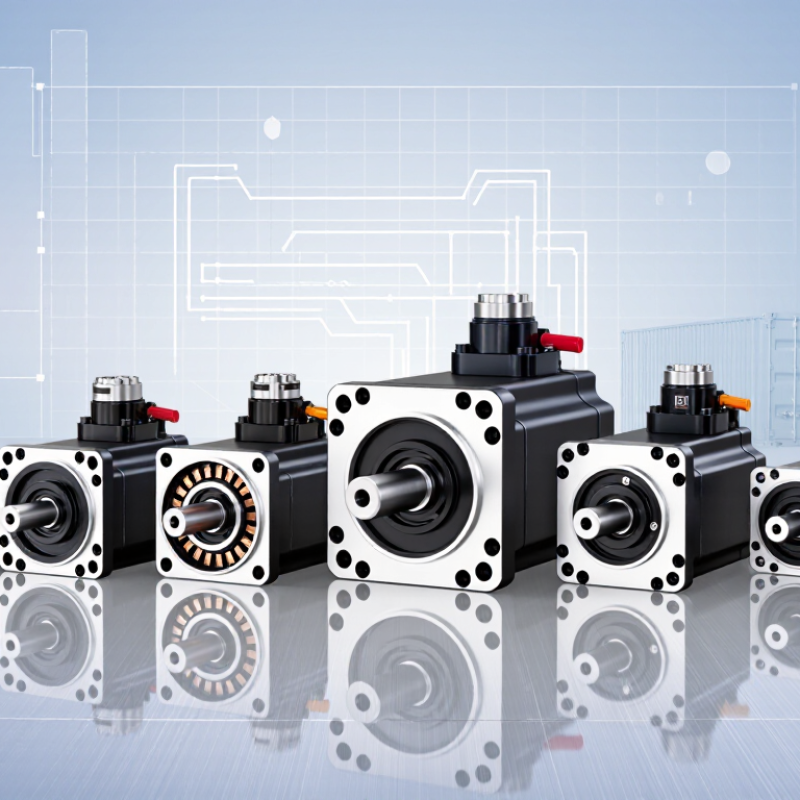
Linear motors create motion directly through electromagnetic force, without a ballscrew, gearbox, or mechanical transmission. This architecture reduces backlash and supports rapid acceleration in semiconductor tools, inspection stages, and precision assembly. A 2024 MarketsandMarkets assessment estimates the linear motor market could grow at roughly 11% annually through 2029, driven by factory automation and high-speed positioning.
Force density matters more than peak thrust alone. A compact motor must deliver stable force while managing heat, cooling, and cable movement. Heat wins. Thermal expansion can shift a stage by several micrometres, even when the encoder appears highly accurate. In practical installations, engineers should check continuous force, duty cycle, cooling method, and moving mass. A catalogue figure may describe a short-term peak, not production performance.
The ±1 µm target also belongs to the complete motion system, not the motor alone. Encoder resolution, guide straightness, vibration, air quality, and calibration all influence the result. ISO 230-2 provides a recognized framework for evaluating positioning accuracy and repeatability on machine tools. Buyers should request measured data under stated temperature and load conditions. That assumption needs checking. A carefully aligned stage may achieve ±1 µm in a controlled test, yet lose margin on a warm factory floor. Independent acceptance testing remains valuable, especially when comparing force density, settling time, and long-term drift.
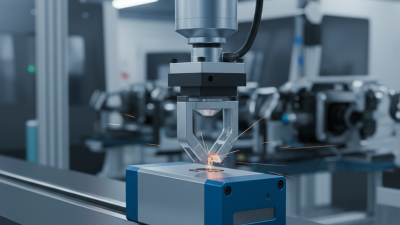
China’s linear motor industry now serves more than one application niche. This market review examines ten Chinese manufacturers across six motion sectors: semiconductor equipment, machine tools, electronics assembly, robotics, packaging, and medical automation. Their products include iron-core motors, ironless stages, tubular actuators, and integrated linear modules.
Demand is supported by broader automation growth. The International Federation of Robotics reported 276,288 industrial robot installations in China during 2023. That figure strengthens demand for precise electric motion, especially in assembly lines and flexible production cells. SEMI also reported strong Chinese investment in semiconductor manufacturing equipment, where nanometer-level positioning and low vibration are essential. Motion performance is not identical across sectors. A packaging line may prioritize speed, while inspection equipment needs repeatability and thermal stability.
The ten manufacturers differ in useful ways. Some focus on compact stages for optical inspection. Others build long-stroke systems for machine tools or warehouse sorting. Several combine motors, guides, encoders, and controllers into ready-to-install modules. This reduces integration time, but it can limit customization. Grand View Research identifies automation, electronics, and medical equipment as important demand areas for linear motion systems. Its market estimates vary by product definition, so comparisons require caution. Catalog specifications also need verification through load tests, duty-cycle data, and after-sales response. A polished datasheet is not enough. Supplier evaluation should include thermal drift, emergency-stop behavior, replacement lead times, and performance after months of continuous operation.
Selecting among China’s top ten linear motor manufacturers requires more than comparing catalog speed. The 1–5 m/s range changes heat, vibration, and cable-management demands. MarketsandMarkets’ 2024 Linear Motor Market report projects a 6.5% CAGR through 2029, reflecting wider automation adoption. Yet market growth does not guarantee application fitness. Ask for continuous and peak thrust curves, not only maximum thrust. A 1,000 N peak rating may collapse during repeated acceleration.
Repeatability should be tested under the real payload, stroke, temperature, and mounting condition. ISO 230-2 provides a useful framework for positioning tests. Request measured bidirectional repeatability, settling time, and accuracy data. Duty cycle matters equally. A motor running 80% of each minute needs different cooling from an indexing axis operating for ten seconds. I have seen buyers accept impressive speed figures, then discover thermal drift during a long shift. That assumption needs challenging.
Tips: Build a comparison sheet using 1, 3, and 5 m/s test points. Record thrust, RMS force, repeatability, temperature rise, noise, and duty cycle. Require at least three test runs. Small gaps often reveal large differences. Also request endurance results and controller compatibility. The International Federation of Robotics reported over 500,000 industrial robots installed globally in 2023, increasing demand for reliable motion systems. Still, supplier data can be incomplete. Independent acceptance testing remains worth the extra time.
China’s ten leading linear motor manufacturers serve machine tools, semiconductor equipment, logistics systems, medical devices, and factory automation. Their portfolios commonly include iron-core and ironless motors, linear stages, voice-coil actuators, and integrated motion modules. Product selection depends on force, travel length, repeatability, thermal control, and encoder resolution. Data matters.
The market context is strong.
The International Federation of Robotics reported 276,288 industrial robots installed in China during 2023, representing about 51% of global installations. This expanding automation base supports demand for high-speed linear motion, although robot figures do not directly measure linear motor sales.
Industry reports from MarketsandMarkets and Grand View Research also forecast steady growth for the global linear motor market through the decade, driven by electronics, packaging, and precision manufacturing. Estimates differ because suppliers classify stages and motors differently.
For global buyers, the ten manufacturers should be compared by export experience, customization capability, certification records, and after-sales response. Examine force curves, continuous-duty ratings, cooling methods, and measured positioning accuracy rather than brochure claims. A stage moving 500 millimeters may perform well in a showroom but drift under heat for eight hours. That is the practical test. Public data remains incomplete, and supplier rankings can change quickly. Buyers should verify factory capacity, sample test results, and delivery history before signing a long-term contract. Industry experience suggests that the cheapest quotation is rarely the lowest total cost.
China Top 10 Linear Motor Manufacturers for Global Buyers
A serious supplier review starts with compliance evidence, not polished product photos. CE marking shows conformity with applicable European requirements; it is not a general quality certificate. Ask for the EU Declaration of Conformity, risk assessment, and relevant test records. RoHS documentation should identify restricted substances, component controls, and revision dates. Missing traceability is a warning sign.
ISO 9001 matters, but certificate scope matters more. The ISO Survey 2022 reported 1,265,216 ISO 9001 certificates worldwide. That number shows broad adoption, not automatic manufacturing excellence. Confirm the certified site, audit body, expiry date, and inclusion of design or production activities. I would also request sample inspection records. Real evidence beats impressive wording.
Lead times need measurable definitions. Request separate dates for engineering approval, production, inspection, and shipment. The supplier should explain capacity during peak periods and identify critical components. A “30-day delivery” promise can hide weeks of approval delays. Warranty terms deserve equal attention. Check coverage length, excluded wear parts, response times, replacement procedures, and freight responsibility. Ask whether performance claims apply after installation and tuning. Some contracts remain vague here. That is a risk worth challenging. A practical buyer may also require a pilot unit, acceptance test, and written remedy for missed specifications.
| Rank | Anonymized Supplier Profile | Typical Product Scope | CE Documentation | RoHS Documentation | ISO 9001 | Standard Lead Time | Typical Warranty | Buyer Verification Checklist |
|---|---|---|---|---|---|---|---|---|
| 1 | Supplier Profile A Large-scale industrial motion producer |
Iron-core linear motors, stages, servo modules, positioning systems | Available for applicable products; request Declaration of Conformity | Material compliance declaration available on request | Certificate should be current and scope-specific | 4–8 weeks | 12–24 months | Confirm force/velocity curves, thermal data, encoder compatibility, FAT procedure, and spare-parts support. |
| 2 | Supplier Profile B Precision automation specialist |
Tubular motors, direct-drive axes, linear stages, cleanroom options | Usually supplied for standard catalog configurations | Request current substance declaration and component list | Verify certificate issuer, expiry date, and manufacturing scope | 5–10 weeks | 12 months | Check repeatability specifications, straightness, vibration data, installation tolerances, and commissioning assistance. |
| 3 | Supplier Profile C High-speed automation manufacturer |
Linear motors for semiconductor, electronics, inspection, and pick-and-place equipment | Applicable conformity files should be provided before shipment | Typically supported through supplier material declarations | Request an authenticated copy before approval | 6–12 weeks | 12 months | Evaluate acceleration limits, peak current, magnetic attraction, cable flex-life, and controller integration. |
| 4 | Supplier Profile D Custom motion-system integrator |
Customized linear motor modules, gantries, stages, and complete subassemblies | Depends on final machine configuration and risk assessment | Request BOM-level compliance confirmation | Verify whether certification covers design, assembly, and testing sites | 8–14 weeks | 12–18 months | Define acceptance criteria, drawings, change-control procedures, software ownership, and on-site service responsibilities. |
| 5 | Supplier Profile E Mid-volume OEM component producer |
Standard linear motors, stators, sliders, magnetic tracks, and accessories | Request product-specific declaration and applicable test reports | Commonly available for standard materials | Confirm validity through the certification body | 3–7 weeks | 12 months | Check minimum order quantity, lot traceability, winding consistency, packing method, and replacement policy. |
| 6 | Supplier Profile F Cost-focused industrial supplier |
Basic iron-core motors, voice-coil actuators, and economical positioning assemblies | Must be confirmed for the exact model and destination market | Request current declaration before purchase order | Do not accept an expired or non-scope certificate | 2–6 weeks | 6–12 months | Prioritize sample testing, thermal protection, dimensional inspection, incoming quality controls, and warranty exclusions. |
| 7 | Supplier Profile G Heavy-duty equipment supplier |
Large linear motors, long-axis systems, gantries, and industrial handling equipment | Available when the completed system falls within the applicable directives | Request declarations for magnets, cables, insulation, and electronics | Verify site and product-quality scope separately | 8–16 weeks | 12–24 months | Review load-cycle calculations, cooling requirements, structural deflection, transport protection, and field-service coverage. |
| 8 | Supplier Profile H Compact actuator specialist |
Voice-coil motors, miniature linear actuators, and short-stroke positioning units | Confirm whether the component or completed equipment requires CE marking | Request component-level material compliance evidence | Check certificate scope against the production location | 3–8 weeks | 12 months | Validate stroke, force constant, duty cycle, coil temperature, acoustic noise, and connector configuration. |
| 9 | Supplier Profile I Export-oriented automation OEM |
Linear motor stages, Cartesian systems, inspection axes, and OEM modules | Request destination-market documentation with shipment records | Confirm compliance for all purchased subcomponents | Verify audit status and certificate authenticity | 5–10 weeks | 12 months | Clarify Incoterms, export packaging, remote commissioning, documentation language, and response time for claims. |
| 10 | Supplier Profile J Prototype and low-volume specialist |
Engineering samples, custom windings, short-run motors, and development platforms | Usually depends on the final integrated product | Request material declarations for prototype parts | Confirm quality-system certification before production release | 2–8 weeks for samples; 8–14 weeks for production | 6–12 months | Use a signed specification, prototype acceptance test, design-freeze process, reliability test plan, and production ramp schedule. |