Top 10 Benefits of Using Linear Motors in Modern Technology?
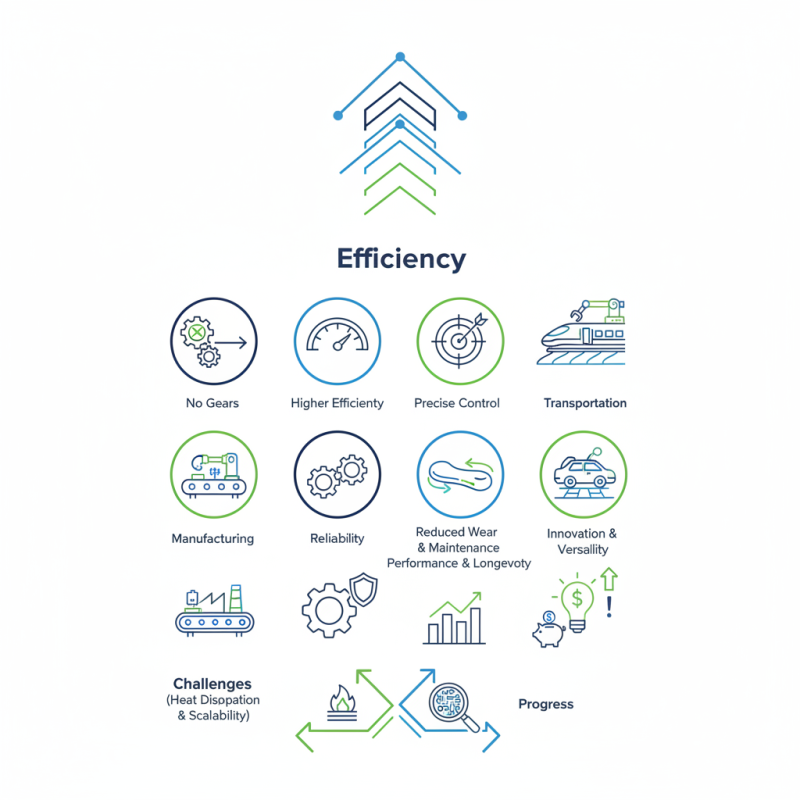
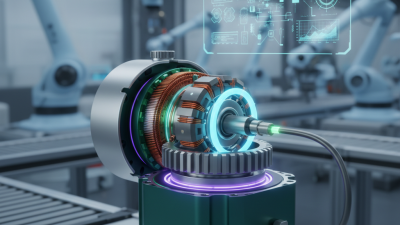
Linear motors are revolutionizing modern technology. Their unique design eliminates the need for gears, resulting in higher efficiency. This technology allows for precise control in various applications. Industries such as robotics, transportation, and manufacturing find immense value in linear motors.
The simplicity of linear motors contributes to their reliability. They have fewer moving parts, which reduces wear and maintenance. This aspect not only enhances performance but also promotes longevity. However, creators must consider the initial investment costs. While the benefits are substantial, upfront expenses can be daunting for some sectors.
Moreover, the versatility of linear motors opens new avenues for innovation. From transportation systems to automated processes, their impact is profound. Yet, challenges remain. As the technology evolves, engineers must address issues like heat dissipation and scalability. The journey isn't flawless, but the progress is undeniable. Embracing linear motors could redefine efficiency and precision across multiple fields.
Advantages of Linear Motors in Precision Motion Control
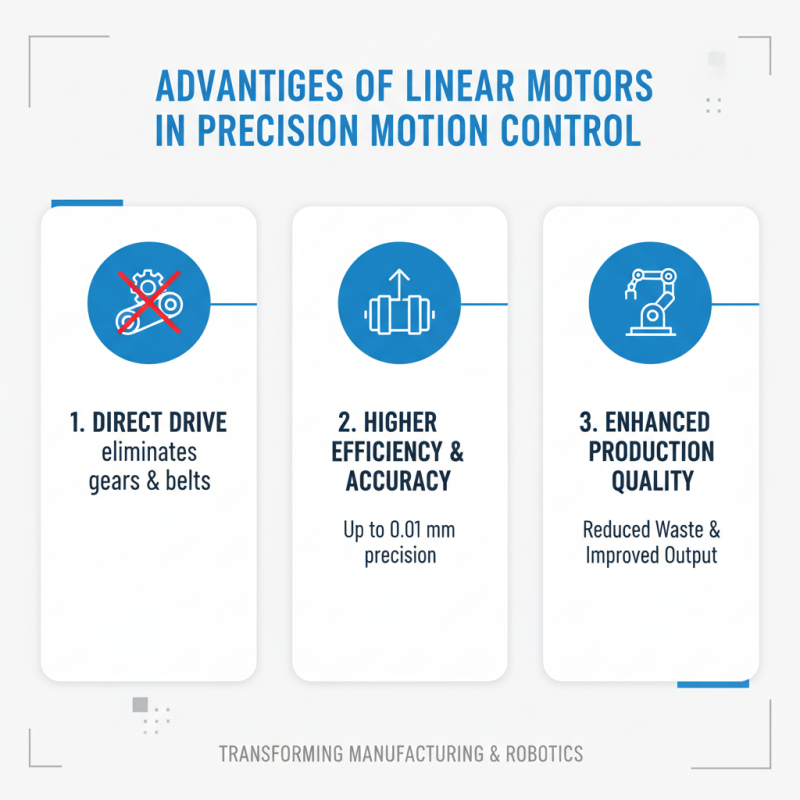
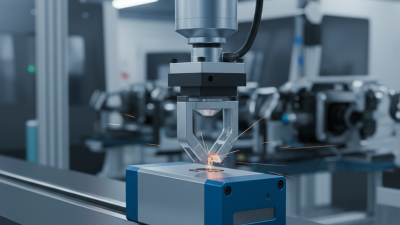
Linear motors have transformed precision motion control across various industries. They provide direct drive systems that eliminate mechanical components like gears and belts. This results in higher efficiency and accuracy. Reports indicate that the precision of linear motors can reach up to 0.01 mm, making them ideal for applications requiring minute movement. In manufacturing and robotics, this accuracy translates into better production quality and reduced waste.
The energy efficiency of linear motors is another noteworthy aspect. Studies show that they can achieve up to 90% efficiency under ideal conditions. This efficiency leads to lower operational costs and minimal heat generation. A remarkable characteristic is their ability to deliver high thrust and speed. Some applications report speeds exceeding 5 meters per second. However, not all systems will experience this level of performance. Factors such as load weight and operational environment greatly affect these outcomes.
Despite their advantages, integrating linear motors poses challenges. High initial costs can deter some organizations. Additionally, manufacturers need to ensure that their systems can handle the performance variations that may arise in real-world applications. While linear motors are promising, their effectiveness can vary based on deployment scenarios and specific requirements.
Enhanced Efficiency and Reduced Energy Consumption with Linear Motors
Linear motors are transforming the landscape of modern technology, particularly in enhancing efficiency and reducing energy consumption. These motors operate on the principle of linear motion, allowing for direct drive systems without the need for complex gear mechanisms. This results in fewer moving parts, which can lead to less wear and tear over time. As a consequence, maintenance costs drop significantly.
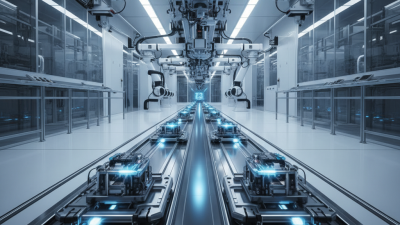
In industrial applications, linear motors can improve productivity by providing rapid acceleration and precise positioning. For instance, automated assembly lines benefit from this technology, as it allows for quick transitions between tasks. However, companies must be cautious. Integration can involve upfront costs and training. Not all environments are suitable for linear motors, and some may find traditional motors more reliable for specific tasks.
Energy efficiency is another key advantage. Linear motors consume less power when compared to traditional systems. They can operate at optimal levels, which reduces electricity usage during peak operations. Yet, it’s crucial to analyze the specific application. Misjudgments in performance can lead to inefficient deployments. Striking the right balance between innovation and practicality is essential.
Compact Design: Space-Saving Benefits of Linear Motor Technology
Linear motors offer significant advantages in modern technology, particularly their compact design. These motors are much smaller than traditional rotary motors. This space-saving feature is essential in applications where every inch counts. For instance, in robotics or medical devices, the reduction in size allows for more streamlined designs. Manufacturers can create lighter, more efficient machines that enhance overall performance.
Additionally, the compact design facilitates easier integration into various systems. This flexibility can improve accessibility in tight spaces while ensuring powerful performance. The straightforward alignment of linear motors supports direct drive mechanisms. This design eliminates the need for additional components, such as gears or belts. However, as with any technology, challenges remain. The cooling of small motors can be an issue. Engineers must innovate to manage heat dissipation in high-performance scenarios.
The potential for linear motors to save space is remarkable. Yet, engineers still face obstacles in material selection and power management. Finding the right materials for durability without adding weight can be difficult. While linear motors are a leap forward, ongoing research is necessary. This helps them reach their full potential in modern applications.
Top 10 Benefits of Using Linear Motors in Modern Technology
The following chart illustrates the key benefits of linear motors, showcasing their compact design and various advantages in modern technological applications.
Improved Speed and Acceleration Characteristics in Modern Applications
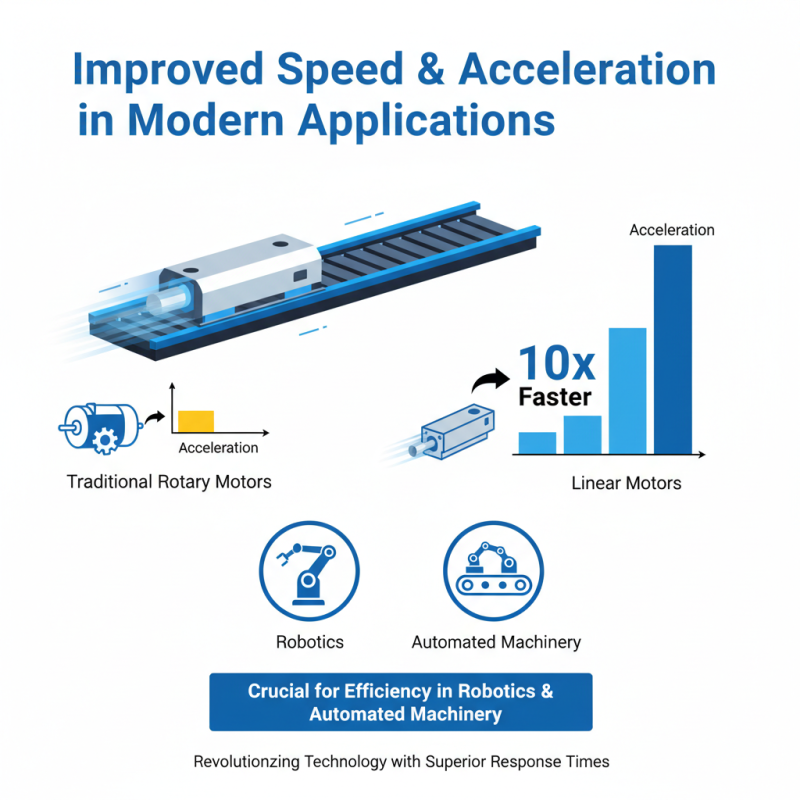
Linear motors are revolutionizing modern technology with their superior speed and acceleration capabilities. Compared to traditional motors, linear motors can achieve significantly faster response times. Studies have shown that linear motors can accelerate objects up to 10 times quicker than conventional rotary motors. This rapid acceleration is crucial for applications in robotics and automated machinery, where efficiency is paramount.
Moreover, the smooth operation of linear motors minimizes mechanical components. This streamlining results in lower maintenance requirements, which is beneficial in fast-paced environments. According to industry reports, systems utilizing linear motors often achieve cycle times that are 30% shorter than those using traditional alternatives. Such improvements can lead to a drastic increase in productivity across various sectors, from manufacturing to logistics.
However, some challenges remain. The initial cost of implementing linear motor technology may deter small businesses. Additionally, the need for precise control systems can complicate integration. Yet, as technology advances, these barriers are gradually diminishing. The pursuit of enhanced speed and acceleration in modern applications drives continued innovation and research, making linear motors a key component in the evolution of efficient technology.
Lower Maintenance Requirements and Increased Reliability of Linear Motors
Linear motors are transforming modern technology. They offer substantial benefits, particularly in maintenance and reliability. These motors have fewer moving parts compared to traditional motors. This reduction leads to lower maintenance requirements. The simplicity of design minimizes the chances of mechanical failures. Users find themselves spending less time on repairs, boosting overall productivity.
Quality control is essential when choosing linear motors. Misalignment can cause operational inefficiencies. Regular checks are necessary, even with less frequent maintenance. This ensures consistent performance and guards against unexpected breakdowns. Practicing proactive inspections can lead to increased lifespan and better reliability.
Investing in linear motors can enhance operational efficiency. Their silent operation and precision contribute to a smoother workflow. Consider incorporating sensors to monitor performance over time. This adds an extra layer of reliability, ensuring optimal functionality. Embracing these technologies can yield significant long-term savings, making them a smart choice for modern applications.
Top 10 Benefits of Using Linear Motors in Modern Technology
| Benefit |
Description |
Impact (Scale 1-10) |
| Lower Maintenance Requirements |
Linear motors have fewer moving parts, leading to reduced wear and tear. |
9 |
| Increased Reliability |
Less mechanical complexity results in fewer failures and longer lifespan. |
8 |
| High Precision |
Linear motors provide precise control over position, speed, and acceleration. |
10 |
| Faster Response Times |
Immediate torque delivery leads to quicker acceleration and deceleration. |
9 |
| Compact Design |
Linear motors take up less space compared to traditional rotary motors. |
7 |
| Reduced Noise Levels |
Linear motors operate more quietly than conventional motors. |
8 |
| Lower Energy Consumption |
Efficiency improvements can lead to significant energy savings. |
8 |
| Better Control over Motion |
Enhanced ability to manage complex motion profiles and paths. |
9 |
| Versatility in Applications |
Suitable for various sectors, from manufacturing to aerospace. |
9 |
| Enhanced Safety Features |
Built-in features for fail-safety and operational stability. |
8 |



 Daniel.Ding
 Ding
Ding