2026 How to Choose the Right Linear Motor for Your Needs?
Choosing the right Linear Motor can be challenging. Industry expert Dr. Emily Chen emphasizes, "Selecting a Linear Motor requires a clear understanding of application needs." Her insight highlights the importance of careful consideration.
Linear Motors come in various types, each suited to specific tasks. Understanding force requirements, speed, and precision is vital. For instance, an application needing high speed may not need the same force as one focused on accuracy.
Many businesses overlook critical details in their selection process. This can lead to inefficiencies or higher costs. A wrong choice may result in motor burnout or poor performance. Reflecting on these aspects can lead to better decisions. Always assess your needs thoroughly before making a choice in this complex landscape.
Understanding Linear Motors: Types and Their Applications
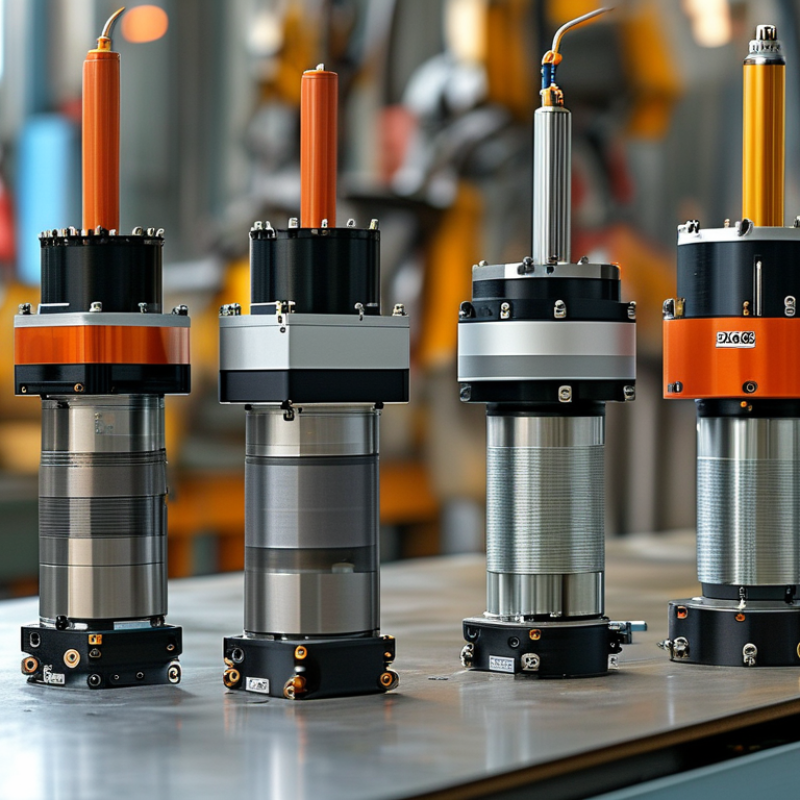
Linear motors are essential in various applications, including robotics, automation, and material handling. Understanding the types of linear motors can help you make a more informed choice. There are primarily two types: tubular and flat linear motors. Tubular motors excel in applications requiring high forces and compact designs, such as in high-speed trains. Conversely, flat linear motors are widely used for precise positioning tasks.
Data shows that the linear motor market is expected to grow significantly. A report from Research and Markets indicates a compound annual growth rate (CAGR) of around 8.5% from 2021 to 2026. This growth is driven by the increasing demand for automation in manufacturing processes. Users should also consider the motor's thrust-to-weight ratio when selecting. Higher ratios enable faster and more efficient movements, crucial in competitive environments.
Assessing application-specific requirements is key to selecting an appropriate motor. Not every linear motor fits every scenario. Test results can vary widely based on operational conditions. Some users report less precision in high-temperature environments. Taking time to compare specifications can yield better results. This complexity underlines the need for understanding. Each application may reveal different challenges. Therefore, careful evaluation and experimentation are essential.
Key Specifications: Torque, Speed, and Size Considerations
When selecting a linear motor, understanding torque, speed, and size is crucial. Torque influences the motor’s ability to handle loads effectively. According to a report by the International Electromechanical Commission, optimum torque ratings can lead to a 30% increase in operational efficiency. Ensure your motor's torque aligns with your application requirements. Insufficient torque may result in sluggish performance or system failures.
Speed is another vital specification. Linear motors can operate at varying speeds—some exceeding 10 meters per second. For example, high-speed automated systems often require motors that can maintain precision at these rapid rates. Without adequate speed, production cycles can suffer significantly. However, higher speeds can cause increased heat generation, potentially leading to wear. Balancing speed and reliability is essential.
Finally, the motor's size must fit the designated space while delivering performance. Compact designs might be tempting, but they can compromise torque and speed. Industry reports suggest a careful assessment of installation dimensions and performance metrics to avoid misleading expectations. This requires testing and iteration. Finding the right linear motor is not just about following specifications. It’s about ensuring all aspects harmonize with your operational goals.
Torque, Speed, and Size Considerations for Linear Motors
Assessing Environmental Factors: Temperature and Dust Resistance
When selecting a linear motor, environmental factors play a crucial role.
Temperature can significantly affect performance. Motors used in high temperatures may face challenges like overheating.
Conversely, extremely low temperatures can impact functionality, making component materials brittle.
Understanding the temperature range suitable for your application is essential for optimal operation.
Dust resistance is another vital consideration. In dusty environments, particles can
infiltrate motors. This intrusion may lead to performance issues over time.
Sealed enclosures or specialized coatings can enhance protection against dust.
However, these options might increase costs. Balancing protection with budget constraints is a necessary step.
In some cases, frequent maintenance might be required regardless of initial protective measures.
Reflecting on real-world applications, testing under specific conditions is vital.
Many users have encountered unexpected failures due to overlooked environmental factors.
Conducting thorough assessments can avoid costly mistakes later.
Don't overlook the importance of a well-rounded understanding of both
temperature and dust resistance when choosing your linear motor.
Make informed decisions based on unique operational challenges.
Evaluating Control Systems: Open-Loop vs. Closed-Loop Solutions
When choosing a linear motor, understanding control systems is crucial. There are two main types: open-loop and closed-loop solutions. Open-loop systems do not have feedback. They rely on pre-set commands. This simplicity can be beneficial for basic applications. However, it may lack accuracy.
Closed-loop systems, on the other hand, provide feedback. They adjust in real time and enhance performance. This means they can correct deviations and ensure more precise control. For complex tasks requiring high precision, a closed-loop system is often the better choice.
Tips: Consider your application’s requirements. If precision is paramount, lean towards closed-loop systems. Keep in mind that they can be more expensive and complex. Open-loop systems might be suitable for less demanding tasks. Evaluating the specific needs of your operation is essential for optimal performance.
Total Cost of Ownership: Initial, Operational, and Maintenance Costs
Choosing the right linear motor goes beyond initial costs. It's crucial to understand the total cost of ownership (TCO). TCO includes operational and maintenance expenses, which can significantly impact your budget over time. According to industry research, operational costs can account for up to 60% of TCO. Factors like energy efficiency, environment, and usage frequency play roles here.
When selecting a linear motor, examine the efficiency ratings. Motors with high efficiency can save substantial energy costs over their lifetime. Real-world data shows that an efficient motor could cut energy expenses by 15-30%. Maintenance costs shouldn't be underestimated. Regular maintenance can prevent downtime and extend motor life. A poorly maintained motor can increase costs by up to 20%.
Tips: Always factor in the operational environment. Motors exposed to harsh conditions will require more maintenance. Investing in a robust design pays off. Also, involve your engineering team when evaluating options. Their insights on compatibility and operational needs are invaluable. Keeping track of TCO helps avoid surprises down the line. Engage with reliable resources to ensure informed decisions.
2026 How to Choose the Right Linear Motor for Your Needs? - Total Cost of Ownership: Initial, Operational, and Maintenance Costs
| Motor Type |
Initial Cost ($) |
Operational Cost/Year ($) |
Maintenance Cost/Year ($) |
Total Cost of Ownership (5 Years) ($) |
| Linear Synchronous Motor |
8,000 |
1,500 |
300 |
12,600 |
| Linear Induction Motor |
10,000 |
1,800 |
400 |
15,800 |
| Voice Coil Motor |
5,000 |
1,200 |
200 |
9,200 |
| Tubular Linear Motor |
12,000 |
2,000 |
500 |
22,500 |






 Daniel.Ding
 Ding
Ding