Why Choose the Right Brake Motor for Your Application?
Choosing the right brake motor for your application plays a vital role in ensuring efficiency and safety. Brake motors are crucial in controlling movement in industrial settings. Their correct selection impacts performance, reliability, and cost-effectiveness.
In various industries, applications vary significantly. Each requires a specific type of brake motor. This selection process can often be overwhelming. Many factors must be considered, such as torque requirements and environmental conditions. An inappropriate choice could lead to failures, increased maintenance, or safety hazards.
Companies should rely on expert advice when selecting a brake motor. Engineers with experience in this field can provide valuable insights. They understand the nuances of different systems. It’s essential to look for recommendations from trusted sources. This decision can save costs in the long run and improve operational efficiency.
Understanding Brake Motors and Their Functionality
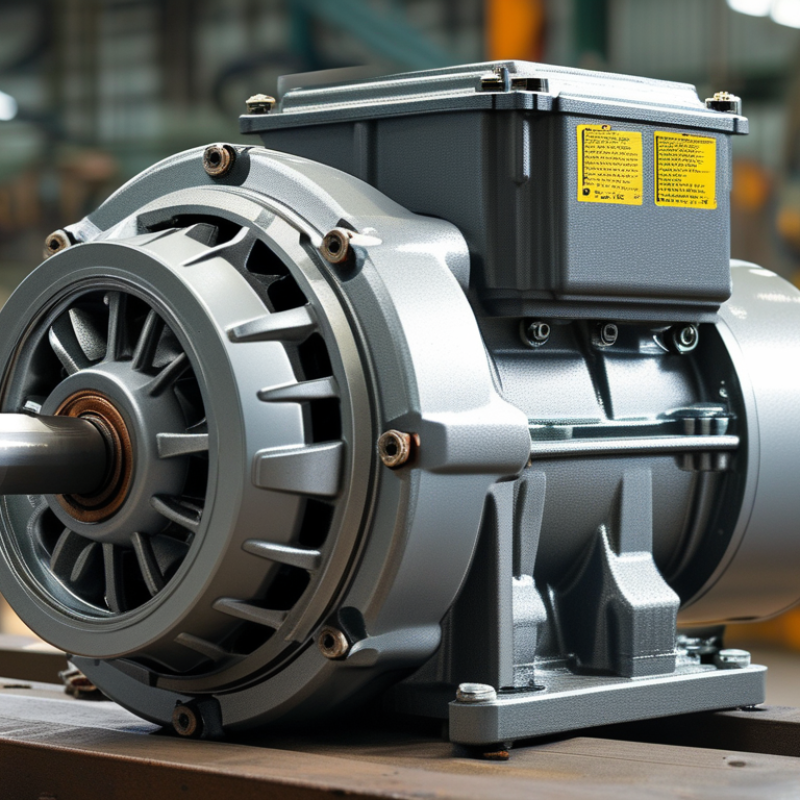
Brake motors play a critical role in various industrial applications. They combine the functionality of a motor and a braking system. This integration offers efficient control over movement. When selecting a brake motor, understanding the technical specifications is essential. For instance, torque ratings, voltage, and operating speeds are fundamental to performance. Incorrect choices can lead to system failures, increased costs, and safety risks.
According to the International Electrotechnical Commission, improper motor selection increases downtime by up to 40%. This statistic emphasizes the need for careful evaluation. Ensuring that your brake motor meets the load requirements can prevent operational inefficiencies.
Tips: Always consult with experts when evaluating options. A thorough understanding of the application can guide you to make better choices. Regular maintenance of brake motors is crucial. It helps in identifying issues early, preventing unexpected failures. Remember, selecting an incorrect motor may lead to long-term consequences that are hard to reverse.
Key Factors to Consider When Choosing a Brake Motor
Choosing the right brake motor is crucial for your application. Consider load requirements first. Motors must handle the weight safely and efficiently. Analyze the braking force needed. Different tasks demand varying strengths. Not all motors can meet these demands.
Next, think about speed and torque. A motor's speed must match the application's needs. High-speed operations require a different approach than low-speed ones. Torque characteristics also play a role. Insufficient torque can hinder performance.
Lastly, environmental factors matter. Motors face different conditions like temperature or moisture. Choose a motor rated for these conditions. Durable materials enhance performance longevity. Installation space is another detail to assess. Ensure your choice fits the physical constraints of your system. Remember, the right brake motor impacts performance and safety significantly.
Different Types of Brake Motors and Their Applications
Choosing the right brake motor for your application is crucial. Different types of brake motors serve varying needs across industries. Whether in manufacturing, transportation, or automation, selecting the right motor enhances safety and efficiency.
There are mainly three types of brake motors: DC, AC, and servo motors. DC brake motors are compact and offer quick response times. They are suitable for applications like conveyors and lifts. AC brake motors are more robust and typically used in heavy machinery. They can handle larger loads but may require more maintenance. Servo motors, on the other hand, provide precise control and are ideal for robotics and CNC machines.
Each type has its advantages and limitations. For example, while DC motors are faster, they can overheat with continuous use. AC motors are powerful but may be less responsive. Understanding these differences is essential when making your choice. This knowledge ensures that your application runs smoothly and efficiently.
Why Choose the Right Brake Motor for Your Application? - Different Types of Brake Motors and Their Applications
| Type of Brake Motor |
Description |
Common Applications |
Advantages |
| DC Brake Motors |
Utilizes direct current for operation. |
Conveyor Systems, Electromechanical Devices |
Quick response time, high control accuracy. |
| AC Brake Motors |
Operates using alternating current. |
Material Handling, Lifts, Fans |
Long lifespan, efficient performance. |
| Permanent Magnet Brake Motors |
Uses permanent magnets to produce the magnetic field. |
Robotics, Electric Vehicles |
High torque at low speeds, compact size. |
| Servo Brake Motors |
Designed for precise control of position and speed. |
CNC Machinery, Automated Systems |
High precision, excellent dynamic response. |
| Slip Ring Brake Motors |
Features slip rings for connection to external circuits. |
Wind Turbines, Mining Equipment |
Suitable for high torque loads, robust construction. |
Assessing Performance Metrics for Brake Motor Selection
When selecting a brake motor, it's crucial to assess key performance metrics. These metrics dictate how well a motor will perform in specific applications. Factors such as torque, speed, and durability play significant roles. Ensuring compatibility with your operating conditions is vital.
Tip: Always consider your application’s load requirements. A motor that meets or exceeds these requirements will enhance longevity and efficiency. For high-cycle operations, choose a motor designed to handle increased stress. This avoids premature wear and unexpected failures.
Another important aspect is energy efficiency. A motor should operate reliably while consuming minimal energy. This not only reduces costs but also contributes to sustainability efforts. It’s wise to review motor specifications to find optimal energy usage.
Tip: Evaluate the installation environment. Harsh conditions demand motors with protective features. Look for enclosures that resist dust and moisture. Not all motors are built to thrive in every condition. Do your research before making a choice.
Performance Metrics for Brake Motor Selection
This chart illustrates the key performance metrics to consider when selecting a brake motor for various applications. The data represents the efficiency, response time, and torque capabilities measured in three different motor types.
Cost-Benefit Analysis of Choosing the Right Brake Motor
Choosing the right brake motor can significantly impact operational costs and system efficiency. A recent industry report indicates that inefficient brake motors can lead to energy losses of up to 30%. This not only affects performance but also increases long-term expenses. Understanding the specific needs of your application is crucial. For instance, a high-torque application may require a different brake motor than a standard load.
Cost-benefit analysis reveals that investing in a suitable brake motor pays off quickly. While the initial purchase price might be higher, the operational savings often outweigh this cost. A study by a leading engineering firm showed that companies saw a 25% reduction in maintenance costs after switching to appropriate models. This reduction is often attributed to improved reliability and reduced failure rates.
Yet, there's a caveat. Many organizations underestimate the importance of proper sizing and selection. This oversight can lead to suboptimal performance and higher total cost of ownership. A brake motor that is too small may fail to provide adequate stopping power, while one that is oversized can waste energy. Performing an in-depth analysis is essential for an effective decision.




 Daniel.Ding
 Ding
Ding