What Are the Best Motion Control Systems in 2026?
Motion control is no longer a hidden component inside a machine cabinet. It shapes how quickly a packaging line indexes, how smoothly a robot places a part, and how reliably a CNC axis repeats its path. Yet the best system in 2026 will not simply have the fastest processor. It must match the machine’s mechanics, sensors, network, safety needs, and maintenance skills.
The International Federation of Robotics reported 541,302 industrial robots installed worldwide in 2023, a 4% decrease from 2022. Its World Robotics 2024 report also counted 4,281,585 robots operating in factories. Those figures describe robotics, not the entire motion-control market, but they show the scale of equipment that depends on precise, coordinated movement. The right controller can matter on every shift.
Peter Nachtwey, founder of Delta Computer Systems and a longtime motion-control engineer, offers a useful engineering perspective: prioritize control performance that fits the machine, rather than choosing specifications for their own sake. This is a paraphrase, not a verified direct quotation. That distinction matters; product comparisons should be equally careful about separating measured performance from marketing claims.
Some details are easy to overlook. A servo may look impressive on a datasheet, yet still perform poorly with a flexible load, noisy feedback, or awkward commissioning software. This guide compares leading Motion Control systems through practical criteria: axis coordination, tuning tools, connectivity, scalability, support, and total cost. The shortlist is not universal. Your application decides.
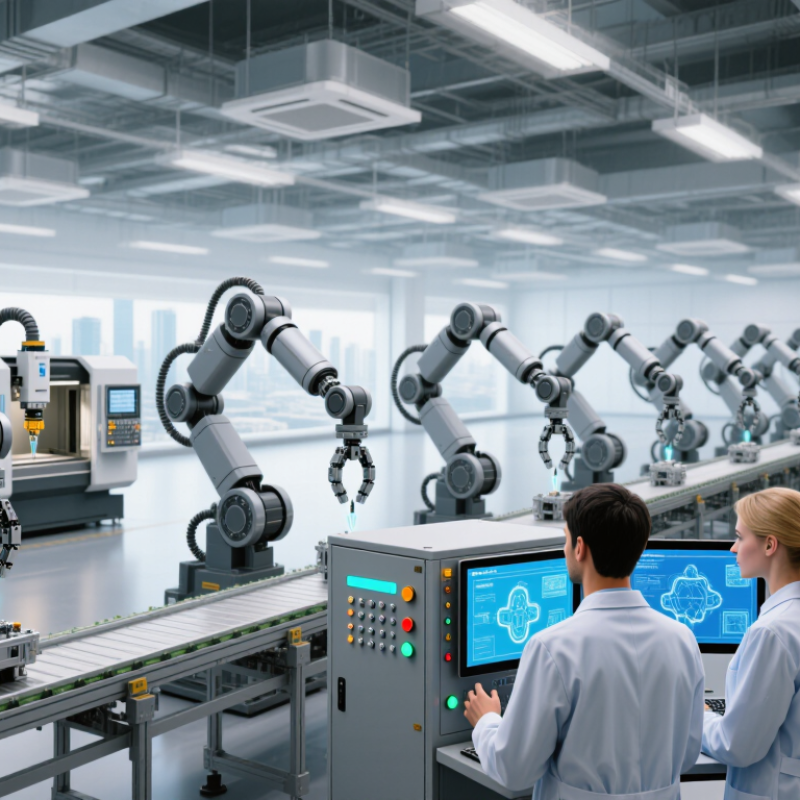
What Motion Control Systems Are and How They Work
What Are the Best Motion Control Systems in 2026?
What Motion Control Systems Are and How They Work
A motion control system directs how a machine moves. It may position a robotic joint, feed material through a printer, or guide a cutting table. Its main parts are a controller, a motor drive, a motor, and feedback devices such as encoders. The controller sets a target, like moving a platform 120 millimeters. The drive supplies power, while the motor turns that command into motion. Simple systems may run without feedback. More demanding tasks usually need it.
Feedback makes the system more precise. An encoder reports the motor’s position or speed to the controller, which compares the reading with the target. If the platform lags, the controller adjusts the drive. This repeating process is called a control loop. Servo systems commonly use feedback; stepper systems can be simpler, though they may lose position under excessive load. Real performance also depends on wiring, tuning, mechanical stiffness, and the job itself. A precise motor cannot fix a loose belt.
Tips: Check the load, travel speed, and required accuracy before choosing components. Test motion at low speed, then inspect position errors and vibration. Small details matter. Measurements can still be imperfect, so leave room for adjustment.
Core Components and Control Architectures
A motion control system is a coordinated chain, not just a motor and a controller. Its core components include a motion controller, servo drives, motors, feedback devices, and mechanical elements such as gearboxes or linear guides. The controller plans position, speed, and acceleration; the drive converts commands into motor current. Encoders report actual movement, helping the system correct errors before a tool drifts off its path. Small details matter. A loose coupling can undermine precise feedback.
Control architecture determines how these components communicate and share decisions. In a centralized design, one controller coordinates multiple axes, which can simplify synchronization but create a concentration of processing and wiring. Distributed architectures place more control near the drives, reducing some wiring demands while requiring careful network timing. Hybrid designs combine both approaches. The right choice depends on axis count, required precision, update rates, and how the machine behaves during faults. The International Federation of Robotics reported 4,281,585 industrial robots operating in factories worldwide in 2023, in World Robotics 2024. That figure shows the scale of automated motion, not a performance ranking of control architectures.
Tips: Match encoder resolution and drive current to the load, not just the motor’s headline rating. Test stopping behavior with the real payload. Network timing deserves attention, too; it is easy to overlook during early design. A neat diagram is not proof of a stable machine.
What Are the Best Motion Control Systems in 2026? Core Components and Control Architectures
Motion control systems combine motion-planning tasks, network updates, and nested position, velocity, and current loops. The ranges shown are representative engineering values, not universal specifications; actual rates depend on the controller, drive, motor, network, and application.
Key Criteria for Evaluating Motion Control Systems in 2026
In 2026, evaluate a motion control system by how accurately and consistently it moves a real machine, not by its feature list alone. Check positioning repeatability, speed range, torque response, and performance during sudden load changes. A system that works smoothly with a small test load may behave differently when a conveyor is full or a tool starts cutting. Review feedback resolution, controller update rates, and how clearly the system reports faults. These details affect both motion quality and troubleshooting time.
Tips: Test representative loads. Record settling time, position error, and temperature during repeated cycles. Check how quickly operators can identify a fault.
Compatibility deserves close attention. Confirm that the controller, drives, motors, encoders, and safety functions can communicate with the equipment already in place. Ask for documented environmental limits, maintenance requirements, and support expectations. A tidy specification sheet can still leave gaps around cable length, electrical noise, or software updates. Those details are easy to overlook, and they can complicate commissioning. Consider lifecycle costs as well as purchase price, including training, spare parts, energy use, and downtime. If a vendor’s test data is available, compare the stated conditions with your own application; the comparison may not be perfect, but it is more useful than guessing.
Leading Motion Control Systems and Their Strengths
Motion control systems differ less by headline speed than by how well they coordinate axes, sensors, and safety functions. Centralized PLC-and-servo systems suit predictable machines, such as packaging lines with synchronized belts and cutters. Their strengths are straightforward sequencing and familiar maintenance. Distributed systems using real-time industrial networks can coordinate many drives across long production cells. They reduce point-to-point wiring, though network setup adds complexity. PC-based control offers flexibility for complex motion profiles and data-heavy applications. Integrated drive-and-motor units save cabinet space. They can be harder to service when a unit fails.
Demand is growing: the International Federation of Robotics reported 4.28 million industrial robots operating worldwide in 2023, up 10% from the prior year, in World Robotics 2024. Its report also recorded 541,302 new installations that year. These figures show why synchronization and reliable feedback matter on modern lines; they do not prove one architecture is best. It depends. In a plant assessment, check axis count, cycle time, encoder resolution, network latency, and available service skills. For example, a gantry that misses position by a fraction of a millimeter may spoil a part, even when its average speed looks excellent. One weakness in many comparisons: they understate commissioning and troubleshooting time. A short pilot on the actual machine can reveal more than a glossy specification sheet.
Choosing a System for Different Applications
Choosing a motion control system starts with the task, not the feature list. A pick-and-place cell may need fast moves, repeatable stops, and predictable settling. A slow-settling axis can reduce output, even when its peak speed looks impressive. For a small inspection stage, smooth low-speed travel and fine positioning may matter more than acceleration. Small details matter. Check payload, travel distance, duty cycle, and required accuracy together. An oversized motor can waste energy, while an undersized one may heat during repeated cycles.
Robots handling changing payloads often need responsive feedback and enough torque across the full motion range. Conveyors may prioritize steady speed and reliable synchronization between sections. In dusty or vibrating environments, enclosure ratings, cable routing, and mounting rigidity deserve attention alongside control performance. Environmental conditions are easy to underestimate. Oil mist, temperature shifts, or a flexible frame can affect repeatability over time. Compare systems using realistic cycle profiles, not just peak specifications. A useful test includes actual loads, frequent starts, and the longest expected operating period. It is tempting to optimize for speed alone; that can be the wrong choice when accuracy, heat, or maintenance intervals matter more. Allow some capacity for future changes, but avoid paying for precision the process cannot use.




 Daniel.Ding
 Ding