Why Choose Linear Motors for Precision Engineering and Automation?
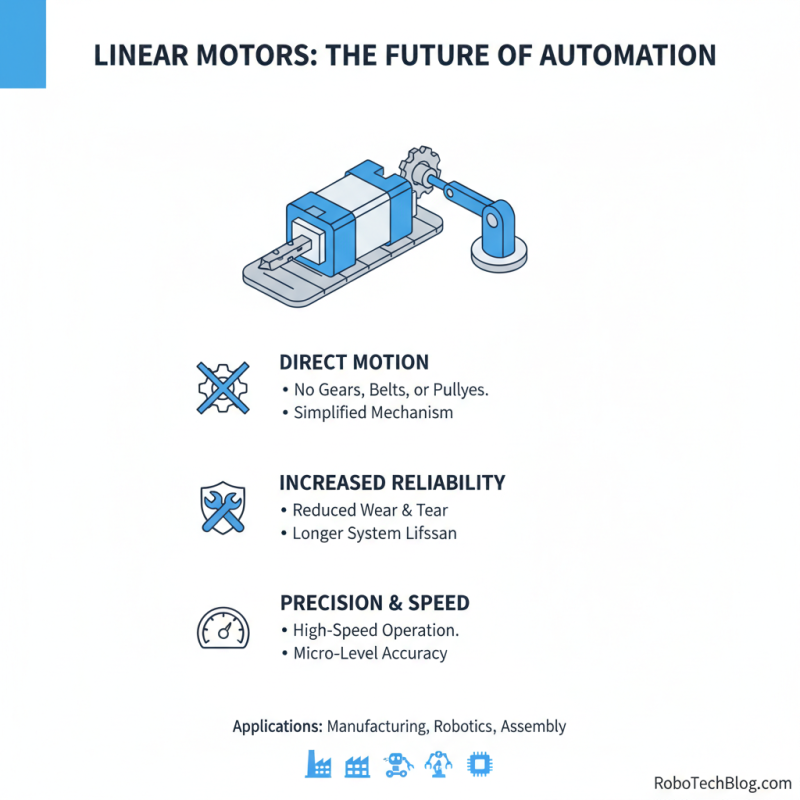
In the realm of precision engineering and automation, Linear Motors stand out as a pivotal technology. Their design allows for direct motion without the complications of traditional mechanisms. This results in smoother and more efficient operations. The unique characteristics of Linear Motors enable high-speed movement and extreme precision. Such features are crucial for industries like aerospace, automotive, and robotics.
However, the adoption of Linear Motors isn't without challenges. Their initial cost can be a barrier for some businesses. Additionally, integrating Linear Motors into existing systems may present difficulties. Despite these hurdles, the advantages often outweigh the drawbacks. With careful planning, companies can harness the power of Linear Motors to improve productivity. This technology can lead to innovative processes and solutions. It's essential to weigh both the benefits and the limitations.
As the demand for precision continues to grow, Linear Motors represent a transformative force in automation. Embracing this technology can empower industries to achieve greater efficiency. The journey to full implementation may be complex, but the potential rewards are significant. Balancing these elements is key to making informed decisions in engineering.
Advantages of Linear Motors in Precision Engineering
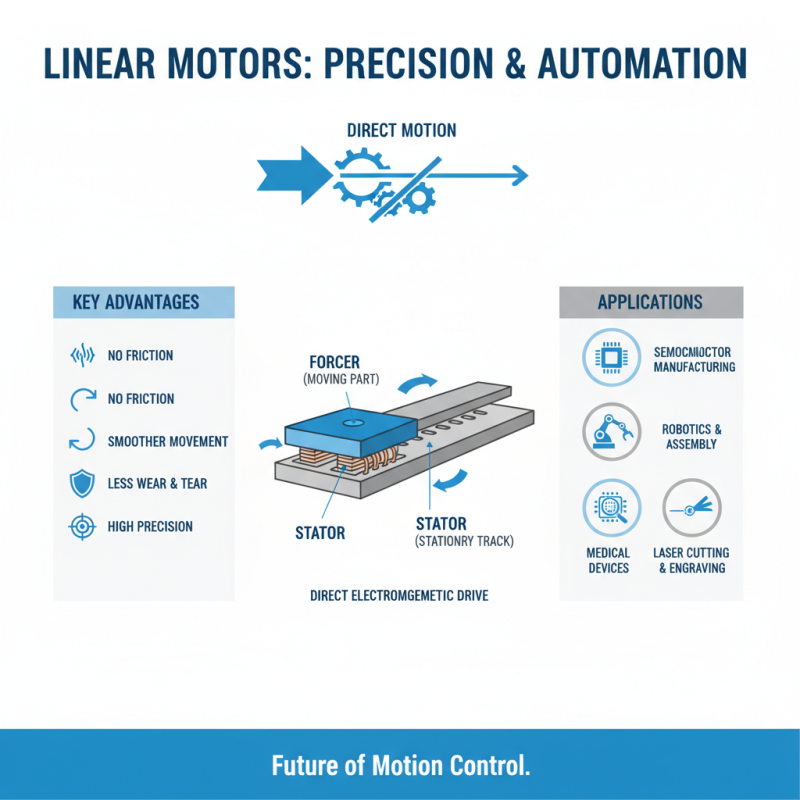
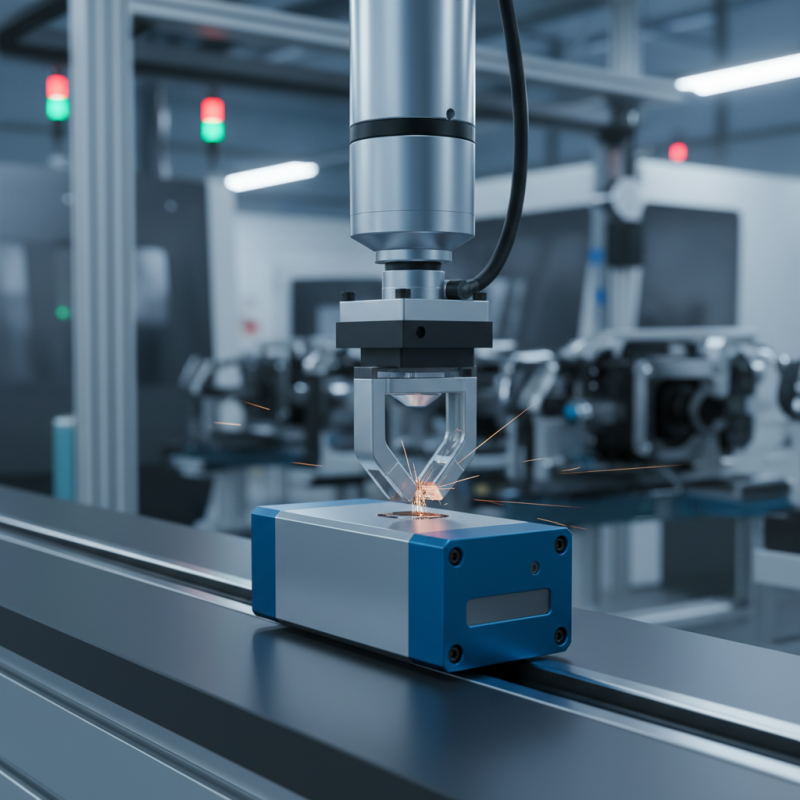
Linear motors are becoming increasingly important in precision engineering and automation. Their design allows for direct linear motion, eliminating the need for mechanical components like gears and belts. This simplification reduces friction and wear, resulting in enhanced performance. With fewer moving parts, there is also a significant reduction in maintenance requirements.
The accuracy offered by linear motors is impressive. They can achieve precise positioning with minimal deviation, making them ideal for applications that demand high precision. For instance, in manufacturing processes, even a tiny misalignment can lead to defects. Linear motors help mitigate this issue by providing consistent and reliable movement. However, achieving the highest level of precision may require meticulous calibration.
Another advantage is their high speed and acceleration capabilities. Linear motors can operate at rapid speeds, significantly improving productivity. Additionally, their responsiveness allows for swift changes in direction, which is beneficial in automation tasks. Still, this speed can result in challenges regarding control and stability. Engineers must carefully manage these factors to ensure optimal performance. The balance between speed and precision is crucial in any precision engineering application.
Applications of Linear Motors in Automation Technologies
Linear motors are increasingly important in automation technologies. They provide direct motion, eliminating the need for mechanical components like gears. This results in reduced wear and tear, promoting longer system life. In sectors such as manufacturing, robotics, and assembly, linear motors enable high-speed operations with impressive precision.
Applications of linear motors can be found in CNC machines. These tools benefit from precise control and quick response times. In automated guided vehicles (AGVs), linear motors help with smooth and efficient movement. They offer reliable performance in critical areas, such as the medical field, where accurate positioning of instruments is vital. Yet, challenges remain. The integration of linear motors into existing systems can be complex and costly.
Considering the potential for energy efficiency, linear motors hold great promise. They can operate with less power, but they may require advanced control systems. This can lead to increased initial investment. While the technology is promising, it needs careful planning for successful implementation. Balancing cost and performance is essential in making the most of linear motors in automation.
Comparison of Linear Motors and Traditional Drive Systems
Linear motors have gained traction in precision engineering and automation due to their unique characteristics. Unlike traditional drive systems that rely on gears and belts, linear motors provide direct motion. They eliminate mechanical friction, resulting in smoother movements and less wear. This makes them ideal for applications requiring high precision.
While traditional systems can manage loads effectively, they often compromise speed and responsiveness. Linear motors offer quick acceleration and deceleration, enhancing productivity. In contrast, traditional systems may suffer from lag. However, implementing linear motors can involve higher upfront costs. The trade-off should be considered based on project budgets.
Noise levels are another factor. Linear motors usually operate quietly, which is beneficial in environments where sound control is important. Traditional systems might not achieve this ease. Still, the complexity of linear motors can pose installation challenges. They may require specialized knowledge for setup and maintenance, prompting some engineers to hesitate. Both systems have their merits, and careful evaluation is essential for the best choice.
Factors to Consider When Selecting Linear Motors
When selecting linear motors for precision engineering and automation, several factors are essential. Firstly, consider the application requirements. Understand the speed, force, and travel distance necessary for your project. A mismatch can lead to inefficiency or failure. Each application is unique, and not all linear motors will suit your needs.
Tip: Evaluate your application’s specific demands carefully. Testing different models might reveal unexpected results. Always allow room for adjustments.
Next, the environment plays a crucial role. Factors like temperature, humidity, and dust can affect motor performance. Ensure the motor you choose is suited for your operating conditions. Environmental resistance is not just a luxury; it's often a necessity.
Tip: Assess the installation environment. Sometimes, protective enclosures are needed. This small addition can drastically enhance longevity and reliability.
Lastly, budget considerations are unavoidable. While it's tempting to choose the cheaper option, consider long-term costs. A less expensive motor might lead to higher maintenance or energy costs. Investing wisely can save money and time.
Tip: Calculate Total Cost of Ownership (TCO). It often highlights hidden expenses that a simple purchase price does not show. This insight is invaluable for a sustainable choice in linear motors.
Future Trends and Innovations in Linear Motor Technology
Linear motor technology is advancing rapidly. The future trends indicate innovative developments in precision engineering and automation. These motors provide accurate positioning and high speed in various applications. Industries are increasingly adopting linear motors due to their efficiency and reliability.
Investing in linear motor systems can improve productivity significantly. They require less maintenance compared to traditional motors. This technology reduces wear and tear, ensuring longer service life. However, the initial costs can be quite high. Businesses must evaluate their budget carefully before transitioning to linear motors.
Tips: Look for suppliers that offer technical support. This can help resolve unexpected challenges. Regular training on new technology is beneficial for your team. Understanding the motor's intricacies can enhance performance. Embracing linear motors is a step toward future-proofing your operations.



 Daniel.Ding
 Ding
Ding